Forever Love and Pain - Reading Ms. Kong Ning's Poem "Women's Flowers
2026-03-28
Qin Hong: To prove that my grandfather is indeed my grandfather
2026-05-27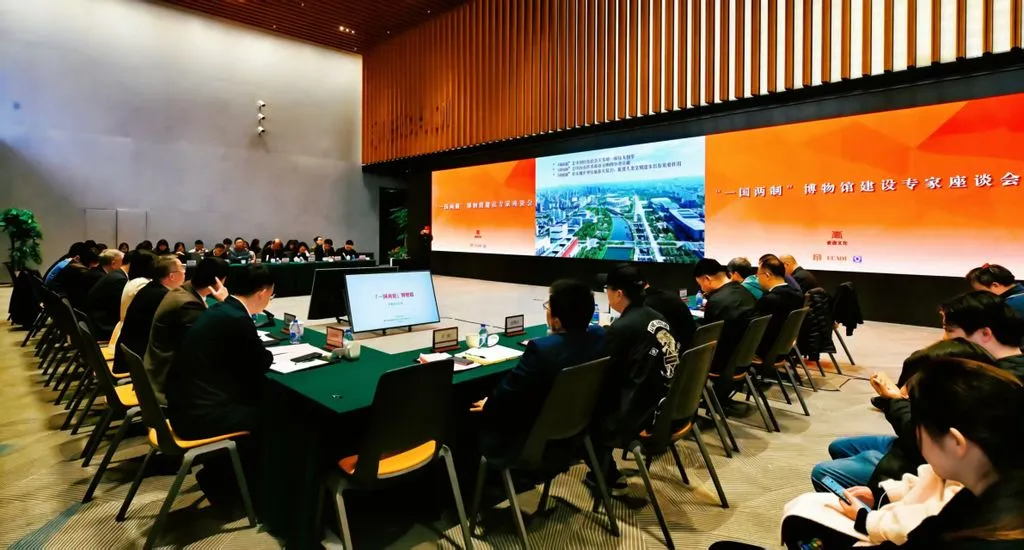
“Expert Symposium on the Construction of the ”One Country, Two Systems” Museum.
According to a report by He Zhiqing, a reporter for the Hong Kong News Agency, as the spring tides warm and magnolias begin to bloom, an in-depth dialogue on national memory and institutional civilization recently kicked off on the banks of the Huangpu River, where Eastern and Western civilizations converge. The “One Country, Two Systems” Museum Construction Expert Symposium, jointly organized by the Preparatory Committee for the “One Country, Two Systems” Museum and the East China Architectural Design & Research Institute of Huajian Group, was grandly held in Shanghai.
“Lü Yingjie, Deputy Head of the Working Group of the Preparatory Committee for the ”One Country, Two Systems” Museum; Rong Weihai, General Manager of the “One Country, Two Systems” Museum Management Co., Ltd.; Shen Lidong, President of Huajian Group; Zhou Jingyu, Vice President of Huajian Group; Xing Tonghe, Senior Chief Architect of Huajian Group; Yao Ji, Chairman of the East China Architectural Design & Research Institute; Mi Zhihui, Vice President of the Shanghai Municipal Engineering Design & Research Institute; and Hu Cheng, Executive Director of the Municipal Engineering and Transportation Institute, among others, attended the event.
The symposium also featured special guest speakers, including Professor Rao GePing, Honorary Dean of the Hong Kong and Macao Research Institute at Peking University; Professor Tian Feilong, Director of the Taiwan, Hong Kong, and Macao Research Center at the Minzu University of China; Researcher Zhang Jian, Director of the Hong Kong and Macao Research Office at the Shanghai Institute of International Studies; Liu Lin, Editor-in-Chief of the Hong Kong News Agency; Professor Xiao Weiguang from the School of Media and Communication at Shanghai Jiao Tong University; Researcher Ni Wai, Full-time Deputy Director of the Hong Kong and Macao Research Center at the Shanghai Academy of Social Sciences, as well as leading experts in the fields of law, media, economics, cultural heritage, and military affairs from Beijing, Hong Kong, Shanghai, Jiangsu, and other regions. They gathered to engage in strategic discussions on the development and positioning of the museum, its exhibition narratives, and cultural dissemination.
The participating experts focused on four core topics: “One Country, Two Systems” and the promotion of outstanding traditional culture; “One Country, Two Systems” and the exchange and mutual learning among civilizations; the cultural and international dissemination of “One Country, Two Systems,” and the development of “One Country, Two Systems” museums. Drawing on their respective fields of research, they spoke freely and offered insightful perspectives to contribute to the development of these museums.

Shen Lidong, President of Huajian Group, delivered a speech.
Architectural Design: With the “Column Base” as Its Soul, Building a National Landmark
At the meeting, Shen Lidong, President of Huajian Group, delivered the opening remarks. He noted that as the “national team” for the construction of revolutionary landmarks, Huajian Group has previously led the design of the First National Congress of the Communist Party of China Memorial Hall, the Deng Xiaoping Former Residence Exhibition Hall, and the Longhua Martyrs“ Cemetery Memorial Site. In undertaking the ”One Country, Two Systems” Museum project, the Group deeply feels the honor of this mission and the weight of this responsibility. It will uphold the highest standards in coordinating design and technical support, and is committed to making it a national landmark project that embodies confidence in the system and fosters national consensus.
“Master Xing Tonghe, chief designer of the ”One Country, Two Systems“ Museum, and Professor Liu Zhiwei provided a detailed explanation of the architectural design concept. The design philosophy of the museum building is summarized by the central concept of ”Eight Harmonies, Four Directions; Two Systems, One Heart.“ Drawing on traditional Chinese culture, the design takes the ”column base“ from traditional Chinese architecture as its prototype, distilling an ”octagonal“ layout that symbolizes the inclusiveness and vastness of the nation’s foundational cornerstones. The main structure is supported by four massive columns and features a cantilevered design encircling two enormous volumes—a symbolic representation of the ”One Country, Two Systems“ concept. This conveys the meanings of ”upholding“ and ”embracing,” as well as a deep longing for the embrace of Mother China. It also symbolizes the harmonious coexistence of the “One China” core and the two systems.
The overall plan adopts the traditional “North Hall, South Garden” layout, which not only aligns with the urban context of Beijing’s Central Axis but also adheres to green and low-carbon principles. The North Hall, designed as a “One Country, Two Systems” museum, features an appropriately scaled design. The ground floor of the main hall houses a 9-meter-high public ceremonial hall that extends from north to south, which can serve as a venue for various important events in the future; The intermediate level houses a variety of specialized exhibition spaces; the “回”-shaped atrium at the top features a retractable roof that allows natural sunlight and fresh air to enter the interior, promoting a green and eco-friendly environment.
On the south side is a complex of buildings centered around an inner courtyard, which will house the Global Digital and Intelligent Communication Center, the Beijing Center of the International Mediation Institute, the Hong Kong and Macao Center, and supporting landscaped gardens, thereby enriching and enhancing the comprehensive functional requirements of the “One Country, Two Systems” Museum.

Rao GePing, Honorary Dean of the Peking University Institute for Hong Kong and Macao Studies, delivered a speech.
Authoritative Discourse: The Transition from Political Ideology to Tangible Manifestation
In his concluding remarks, Professor Rao GePing, Honorary Dean of the Hong Kong and Macao Research Institute at Peking University, pointed out that establishing a “One Country, Two Systems” museum is a great undertaking that will “benefit future generations for centuries to come,” and he highly commended the initiators“ sense of mission and responsibility. He emphasized that this is a challenge to give concrete and tangible form to a political concept; in essence, it represents a leap ”from interpretation to exhibition,” requiring the transformation of a national governance strategy into a historical exhibition that resonates with the public—a task of considerable difficulty.
Rao GePing suggested that the exhibition content should differ from typical political propaganda and should instead rely more on artifacts and real-life examples to illustrate its concepts. He proposed that the practical implementation of “One Country, Two Systems” could be summarized into three phases: the Policy-Establishment Phase (the Deng Xiaoping era)—proposing the concept, laying the legal foundation, concluding Sino-British negotiations, and securing the initiative during the transition period; and the Implementation Phase (the Jiang Zemin and Hu Jintao eras): realizing the return of Hong Kong and Macao, implementing “One Country, Two Systems,” and putting into practice “Hong Kong people governing Hong Kong,” “Macao people governing Macao,” and a high degree of autonomy; and the In-Depth Implementation Period (the Xi Jinping Era): comprehensively and accurately understanding and implementing “One Country, Two Systems” and the Basic Law, enacting Hong Kong’s national security legislation, improving the electoral system, and advancing the integration of Hong Kong and Macao into the broader national development framework.
This insightful discussion on historical periodization establishes a fundamental framework for developing the exhibition logic of museums.
A Multidimensional Perspective: The Deep Integration of Culture, Education, and International Communication
The experts in attendance offered suggestions on the museum’s development from various perspectives, agreeing that the museum should not merely be a showcase for the political system, but rather a cultural hub and an educational center.
Xiao Weiguang, a professor at the School of Media and Communication at Shanghai Jiao Tong University and director of the Research Center for the Dissemination of the Party’s Innovative Theories, proposed that the “One Country, Two Systems” Museum should be developed into a “national cultural heritage project” and serve as a strategic vehicle for preserving national memory, shaping cultural identity, promoting international communication, and building a community with a shared future for mankind. He suggested drawing on the “one entity, multiple branches” model of the National Version Library to form a system characterized by “unity in diversity” and “the moon reflecting on a thousand rivers,” in which the main museum in Beijing would develop in tandem with branch museums in Hong Kong, Macao, Shanghai, and other locations; by integrating the experience of the Palace Museum, using physical artifacts to preserve memory, academic research to underpin discourse, storytelling to convey values, and technology to expand influence, thereby building a cultural hall that seamlessly combines “policy exhibitions” with “historical narratives.”
Xiao Weiguang emphasized the “educational” function of museums, advocating for their integration into the national education system. He proposed that museums and schools collaborate to develop school-based curricula on “One Country, Two Systems” to create a youth-friendly educational platform. At the same time, he suggested that museums be developed into key platforms for public diplomacy by inviting foreign diplomats, overseas experts, and visitors to China to tour and engage in exchanges, thereby replacing “hearsay” with “firsthand observation.” This would make museums the first stop for foreign dignitaries to learn about “One Country, Two Systems,” an international reception hall for understanding China’s institutional civilization, and a vital window for the international community to gain insight into China. Citing the spirit of Tao Fen, he advocated for a subtle and gentle approach to communication—one that “nourishes people imperceptibly”—to effectively tell China’s story to the world.
Researcher Ni Wai, Full-time Deputy Director of the Hong Kong and Macao Research Center at the Shanghai Academy of Social Sciences, focused on international communication strategies for “One Country, Two Systems.” He pointed out that external communication needs to shift from grand political narratives to people-centered, emotional narratives, using micro-level case studies of changes in the lives of Hong Kong and Macao residents to illustrate broader trends. Researcher Ni Wai suggested that museum development should emphasize the diversity of communication stakeholders, actively engage civil society and think tanks, and leverage the algorithms of emerging social media platforms such as TikTok for targeted outreach. He also proposed leveraging Hong Kong’s status as an international society to introduce international donation mechanisms into museum development, conduct oral history documentation, and widely mobilize the communities of Hong Kong, Macao, Taiwan, and overseas Chinese to jointly build these initiatives.
Dr. Xie Peihong, Assistant Dean of the Hong Kong and Macao Research Institute at Peking University, drew on her teaching and research experience to offer unique insights from a micro-level perspective. She pointed out that current education on national conditions for students from Hong Kong and Macao tends to focus on historical and cultural immersion and experiential exchanges, while lacking a systematic explanation of “One Country, Two Systems” from the perspective of “institutional confidence.” At the same time, mainland students also urgently need to strengthen their education on these systems, as this will help deepen the younger generation’s understanding of the significant advantages of China’s national systems and governance framework.
To ensure the sustainable development of museums, Xie Peihong suggests focusing on enhancing their appeal to young people: First, optimize the structure of exhibition halls by scientifically planning the ratio and layout of permanent and temporary special exhibitions; second, innovate spatial design by reasonably arranging static displays and dynamic experiential spaces, and introducing formats popular among young people, such as murder mystery games and interactive games; third, enrich the narrative of the exhibits: explore ways to combine public artifacts with personal items, place emphasis on collecting and displaying personal artifacts, and evoke a broad sense of resonance among visitors through the emotional connections and narrative links between the exhibits and individuals.
Xie Peihong emphasized that the “One Country, Two Systems” Museum has three distinctive characteristics: a short time span covered by its exhibits, dynamically evolving content, and a focus on political systems. In light of these characteristics, we should proactively identify potential challenges and make every effort to establish an original model for China’s first museum dedicated to political systems.
Bao Guoqiang, chief expert of a national key research project, dean of the Institute of Global Corporate Communication at Shanghai University, and doctoral advisor, suggested incorporating elements of entrepreneurship to showcase the economic vitality and human warmth under the “One Country, Two Systems” framework. He believes that “One Country, Two Systems” is fertile ground for fostering an entrepreneurial spirit. He proposes establishing dedicated spaces to tell the stories of entrepreneurs from Hong Kong and Macao who, leveraging the institutional advantages of the system, have broken through boundaries, integrated resources, given back to their hometowns, and promoted mutual learning between civilizations. This would transform the museum into a platform for “serving the nation through commerce,” showcasing the human touch and power of the system’s narrative.

Tian Feilong, Director of the Center for Taiwan, Hong Kong, and Macao Studies at Minzu University of China, delivered a speech.
Expert Recommendations: Building a World-Class Platform for Cultural Dialogue
Tian Feilong, Director of the Center for Taiwan, Hong Kong, and Macao Studies at Minzu University of China, pointed out that “One Country, Two Systems” is not only a strategy, a system, and a policy, but should also be elevated to the cultural level for integration and evolution. He praised the design proposal for transforming an abstract concept into a concrete architectural form, calling it a significant shift in perspective and an innovation in communication. Tian Feilong particularly emphasized that the museum’s construction should not be limited to a Chinese perspective but should adopt an international outlook, exploring the “One Country, Two Systems” framework’s peaceful value and institutional wisdom in resolving human sovereignty and geopolitical disputes. He called for the simultaneous establishment of a digital team and an expert advisory team, in addition to project planning and approval, to broadly engage knowledge, experts, and resources from Hong Kong, Macao, Taiwan, and the overseas Chinese community, ensuring the delivery of a high-quality outcome by 2029—the 80th anniversary of the founding of the People’s Republic of China—and establishing the “One Country, Two Systems” Museum as a spiritual bridge connecting China with the world, fostering dialogue among different civilizations, and promoting peaceful human development and the building of a community with a shared future for mankind.
Zhang Jian, a researcher and director of the Hong Kong and Macao Research Office at the Shanghai Institute for International Studies, suggested that “One Country, Two Systems” should be positioned as a public good provided by China to the world, and that a dedicated space should be established to showcase its international application and impact. He proposed that a “One Country, Two Systems” museum should not only effectively explain the theory and practice of “One Country, Two Systems” but also showcase its spiritual essence and artifacts. At the same time, he suggested attracting regional headquarters of cultural and museum enterprises from Hong Kong, Macao, and around the world to enrich the park’s content.
Meng Weizhan, an associate researcher at the Institute for Advanced Study in the Social Sciences at Fudan University, earned his Ph.D. from the University of Hong Kong and has deep affection for the city. He suggested that museums could fully showcase the rich academic atmosphere and scholarly achievements of Hong Kong’s universities to the mainland public, noting that the international rankings of Hong Kong’s universities have remained virtually unaffected since the central government assumed full jurisdiction over Hong Kong; He also analyzed Hong Kong’s unique strategic value as a bridge connecting China and the West in the current international geopolitical landscape, noting that despite facing external pressure, Hong Kong has instead ushered in a “second opportunity”; Divisions within the Western world mean that Hong Kong can continue to serve as a window for China’s engagement with various nations in the future. Hong Kong’s strategic position in international shipping, finance, and geopolitical competition will become increasingly prominent. He recommended that the museum fully showcase this complex external environment and the resilience demonstrated by Hong Kong.
From the perspectives of international communication and finance, Lin Sixian, an associate professor at the School of International Journalism and Communication at Beijing Foreign Studies University, pointed out that China’s soft power is currently growing steadily, and Western audiences are showing increasing interest and curiosity in China’s institutional development. Museums should seize this opportunity to serve as a fulcrum in the “narrative war” against Western smear campaigns. She also recommended establishing multilingual service systems and utilizing immersive technologies to more effectively tell the story of China’s institutional framework.
Sun Jinxia, Deputy Director of the Orient Securities Research Institute, suggested increasing content that highlights Hong Kong’s unique role as an international financial center—such as showcasing cases from the Basic Law and common law, simulating international financial arbitration scenarios, and emphasizing the international trust fostered by its mature rule of law, free flow of capital, and practices in international arbitration and mediation.

From right to left: Rao GePing, Lü Yingjie, Zhou Jingyu, and Yao Ji at the symposium.
Reimagining Our Identity: The Dual Mission of Decolonization and Cultural Heritage Preservation
“In his closing remarks, Lü Yingjie, deputy head of the working group of the Preparatory Committee for the ”One Country, Two Systems“ Museum, emphasized that The establishment of the ”One Country, Two Systems“ Museum is not only a major strategic initiative to uphold and improve the ”One Country, Two Systems“ institutional framework in the new era, but also a concrete practice that gives tangible form to the important statements on ”One Country, Two Systems” made by Xi Jinping and other Party and state leaders. It holds far-reaching political and historical significance, as well as contemporary value.
Regarding the issue of “decolonization,” which has drawn significant attention from all sectors of society, Lü Yingjie has put forward highly innovative and pragmatic proposals. He advocates a strategy of “critical preservation” for Hong Kong’s existing colonial-era street names, which involves maintaining the city’s original character and historical fabric while installing historical plaques to present a “counter-narrative.” This initiative aims to transform the “glory” that colonizers originally used to tout their achievements into evidence of aggression nailed to the pillar of historical shame, thereby reshaping the value of these names from “commemoration” to “warning.” By transforming city street corners into vivid historical teaching materials, citizens and tourists can gain a deep understanding of the meaning of national sovereignty and national dignity through an immersive experience where “history is just around the corner.” This breaks down the limitations of physical space and turns the entire city into an integral part of a “One Country, Two Systems” museum.
Lü Yingjie concluded by emphasizing that building a “One Country, Two Systems” museum is a sacred mission entrusted to our generation by our times. He said, “At all times, we must remain closely united under the strong leadership of the Communist Party of China with Comrade Xi Jinping at its core, hold high the great banner of Xi Jinping Thought on Socialism with Chinese Characteristics for a New Era, and comprehensively advance the building of a great nation and national rejuvenation through Chinese-style modernization.” ”

“Group photo of experts at the symposium on the construction of the ”One Country, Two Systems” Museum.
It is reported that after the meeting, some delegates were invited to visit the Shanghai Construction Group, where they conducted an inspection tour and exchanged views accompanied by Zhang Liang, the Group’s Vice President, and heads of relevant departments. They also visited the North Bund World Lounge in person. Immersed in the magnificent transformation of the century-old wharf and gaining insight into the institutional innovations of this Eastern hub, the delegation experienced firsthand the vibrant pulse of Shanghai as a “pioneer of reform and opening-up” through the practical implementation of “restoring the old to its original state” and “seamless customs clearance.”
Rong Weihai remarked with deep emotion that this dialogue spanning a century not only showcases the city’s miracles but also provides invaluable practical references and inspiration for considering how a “One Country, Two Systems” museum can embody the depth of history and showcase institutional innovation. (Photo by Hua Xiutang)
 English
 简体中文
 香港中文
 日本語
 Español
 Português
 Français