Expert Symposium on "One Country, Two Systems" Museum Construction Held in Shanghai
2026-04-01
Who Is Defining the Global Influence of Chinese Enterprises? The "2026 Annual Report on the Global Influence of Chinese Enterprises" Has Been Officially Released
2026-06-15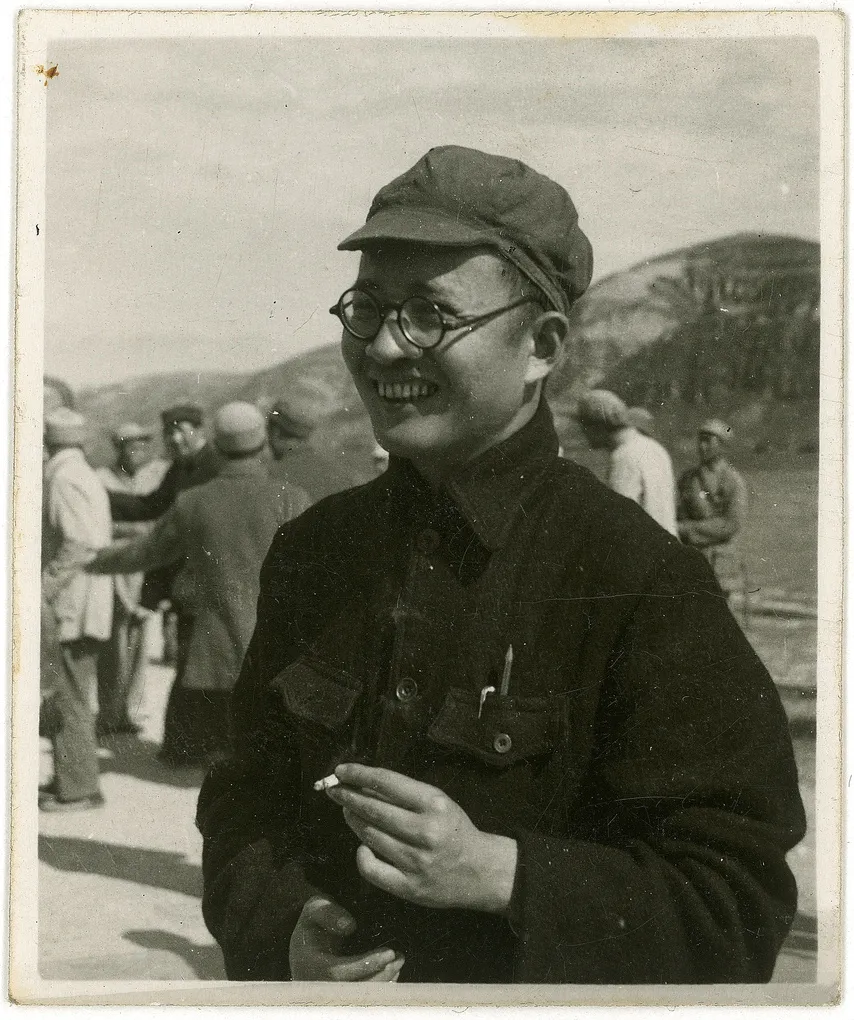
In 2013, on the eve of the 106th anniversary of Qin Bangxian’s birth, his third son, Qin Tie, made a moving remark during a media interview: “History cast my father in the role of a man who made mistakes.”
”This 24-year-old early leader, who was called upon in a time of crisis to serve as the acting head of the CPC Central Committee, saw his life—from the moment he stepped onto the stage of history until his death in a plane crash at the age of 39—spanned a mere fifteen years, a period that encapsulated the twists and turns and hardships of the CPC’s early development."
But for his eldest granddaughter, Qin Hong, “Grandpa” has never been merely a historical figure; rather, he is a presence she has spent half her life trying to understand and come to terms with.
Qin Hong, born in 1967, is Bogu’s eldest granddaughter. She graduated from the School of Economics at Peking University in 1990 and was one of the early professionals in China’s securities and fund industry. She has served as deputy general manager of Morgan Stanley Huaxin Fund Management Co., Ltd. and general manager of Zhongke Huize Asset Management Co., Ltd., among other positions. She could have been content with her career and personal life, fully enjoying the pleasures that material wealth brought her, but she chose a difficult path—spending more than a decade and over a million yuan of her own money to uncover the truth about her grandfather’s identity.
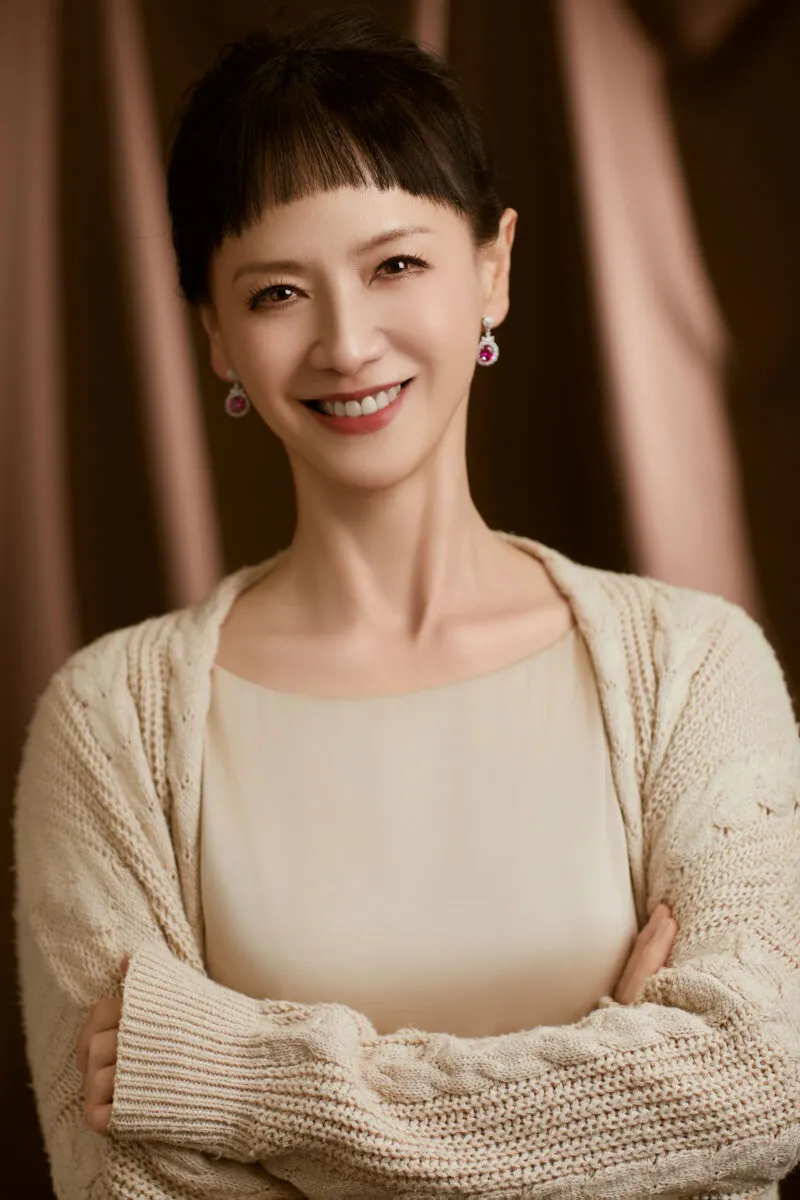
The story began somewhat by chance, yet it also seemed as if it were destined by a higher power. In 2011, Qin Hong’s father, Qin Gang, passed away. After her father’s death, her aunt asked her, “Are you going to continue the work your father was doing?” Qin Hong was taken aback: “What work was he doing?” It was only then that she learned her father had been involved in research projects—such as the Bo Gu biography—during his lifetime, contributing both money and effort to them.
In 2012, Qin Hong’s son was about to go abroad. One day, while driving to work, she suddenly felt that her days ahead might be a bit lonely, so that evening she looked up Bo Gu’s biography and posted it on her blog. Soon after, someone left a comment: “Congratulations on the 104th anniversary of Bo Gu’s birth.” She checked the lunar calendar and found that the 14th day of the fifth month was indeed Bo Gu’s birthday. “This might have been my grandfather sending a message from heaven,” Qin Hong said many years later.
She did not come from an academic background, had no training in historical research, and had never even met her grandfather. When Bo Gu died in a plane crash in 1946, Qin Hong’s father was still just a child, but throughout her childhood, because Bo Gu was considered a “leader who had made mistakes,” people always looked at her with a certain complexity in their eyes…
So, Qin Hong was particularly eager to find out what kind of person her grandfather really was. Over the past decade or so, she has pored over a vast amount of historical documents, retraced the route of the Long March, and visited every place where Qin Bangxian had once studied, worked, or lived. She even made special trips to Russia and the United States in search of her grandfather’s footsteps and supporting evidence.
In 2022, at the academic symposium marking the “115th Anniversary of Qin Bangxian (Bogu)”s Birth,“ she chronicled her grandfather’s experiences while studying at Sun Yat-sen University in Moscow and, through rigorous historical research, clarified some misconceptions within the academic community. For example, she addressed the meaning of the name ”Bogu.”
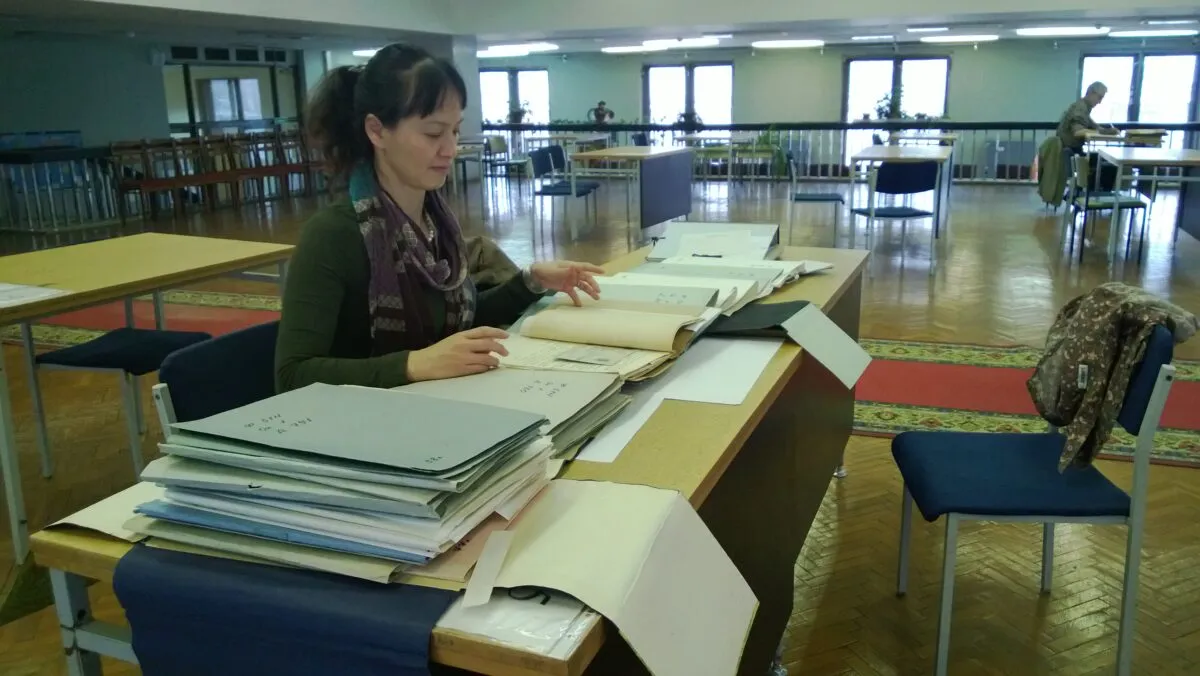
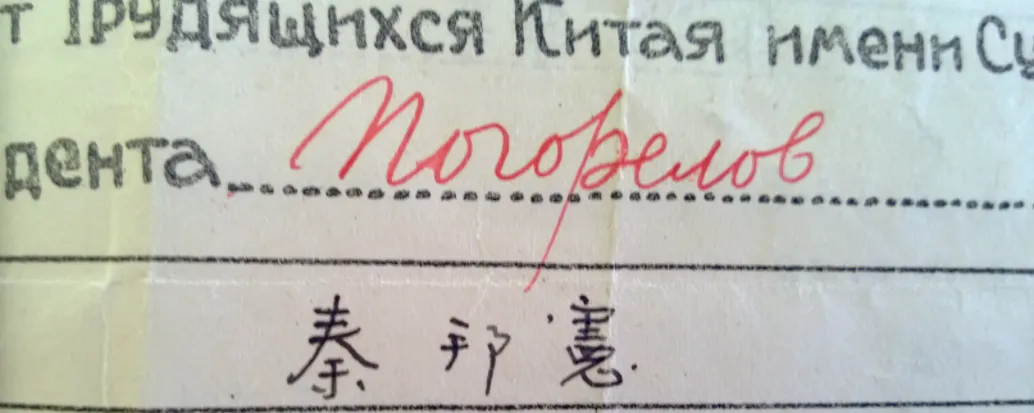
Previous academic research often assumed that Qin Bangxian’s Russian name was pronounced “Bogunov,” with “Bogu” meaning “God.” She pointed out that this is incorrect; Qin Bangxian’s Russian name is pronounced “Pogorelov,” whose root is actually related to “burning”; the original intent of “Bogu” was to express her resolve to “live as a Chinese person and die as the spirit of China.” She cannot tolerate even a single misinterpretation of a name—this almost obstinate pursuit of truth stems from her determination to ensure that her grandfather is not overshadowed by any labels.
One of Qin Hong’s research achievements is serving as the chief editor of *Bogu and His Era: A Collection of Essays on Qin Bangxian (Bogu)*. This collection includes more than 120 articles by approximately 90 experts, scholars, and other relevant figures, offering an objective, straightforward, and comprehensive account of Bo Gu’s revolutionary career and personal life. Divided into two main sections—theoretical explorations and a retrospective on his personal life—the volume totals 883 pages. This is not merely a “tribute to Grandpa,” but a serious work of academic research.
Qin Hong’s role in this project is very clear—she is both a facilitator and a student, using her project management skills to mobilize resources from all sides to complete this groundbreaking work, while also learning what constitutes good historical research in the process.
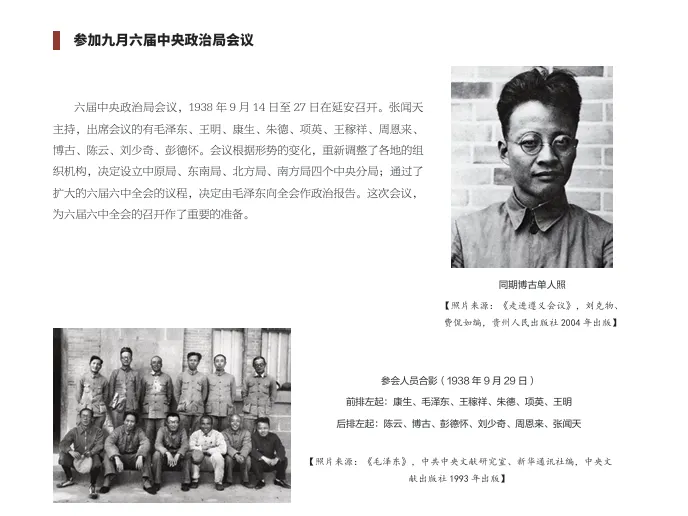
In 2025, Qin Hong donated the book series *Bogu and His Era* and *Studies on Qin Bangxian*, which she edited, along with related historical materials, to the Chongqing Hongyan Museum of Revolutionary History. She also participated in the production of the documentary *My Grandfather Translated *The Communist Manifesto***, serving as a “historical investigator.” Drawing on her personal perspective and interweaving past and present narrative threads, she authentically recreated for viewers the intertwined life story of Qin Bangxian and *The Communist Manifesto*.
The film was selected for the 2022 National Radio and Television Administration's Recommended List of Outstanding Domestic Documentaries.
During her visits, Qin Hong continually discovered little-known aspects of her grandfather’s life. At the War of Resistance industrial heritage site in Changle Yuan, Baoji, she learned that during the Battle of Wuhan, her grandfather had suggested to his international friend Louis A. Eli that enterprises be mobilized to relocate to the Northwest, which directly led to the relocation of 21 enterprises from Wuhan; 15 of which settled in Baoji, thereby preserving industrial resources for the War of Resistance and laying the foundation for Baoji’s modern industrial sector. These details, which had previously been glossed over in official narratives, gradually came to light through her research.
When asked why she has devoted so much time and energy to this, Qin Hong’s own answer is simple: “My approach to life is this: since I’m idle anyway, I might as well find something interesting and meaningful to do.” “ ”Figuring out exactly who my grandfather was may be something I’ll never fully accomplish in my lifetime, but that doesn’t stop me from continuing to strive toward it.” However, from another perspective, by applying rigorous academic standards to reconstruct the true figure of Qin Bangxian, she has filled a gap in the study of Party history, and her research has been highly commended by the Central Party History Department.
However, even when descendants are compiling the history of their ancestors, their attitudes vary. For example, some descendants believe this task should be carried out by an organization. This view is not uncommon—many people believe that organizations should be responsible for rescuing and preserving memories, but organizational behavior is governed by inherent norms, with clear guidelines regarding who is qualified to conduct research and how conclusions should be reached. Yet when it comes to bringing to life a warm, multidimensional figure, family members are precisely the ones best suited for the task.
Throughout history, famous figures are often reduced to nothing more than a flat name in a textbook, accompanied by a note listing their “achievements” or “mistakes.” This is precisely the case with Bo Gu. According to the Party’s historical assessment, as one of the leading figures of the “leftist dogmatist line,” he, together with Li De, was responsible for the military defeat in the Fifth Counter-Encirclement Campaign and the massive losses suffered by the revolutionary bases.
But behind these labels lies a person whose way of thinking has changed.
After the Zunyi Conference, Bo Gu relinquished his power without any complaints. At a critical moment for the Red Army’s very survival, faced with irrefutable facts, and under the guidance and assistance of Mao Zedong, Zhou Enlai, Wang Jiaxiang, and others, he underwent a significant ideological transformation, demonstrating a Communist’s scientific spirit of adhering to the truth and his firm and profound commitment to the Party.
He subsequently served as head of the Chinese Communist Party delegation and, together with Zhou Enlai and Ye Jianying, played a role in the peaceful resolution of the “Xi’an Incident,” the restoration and reconstruction of Party organizations in 13 southern provinces, and the formation of the New Fourth Army; In 1941, he founded the *Liberation Daily* and served as its editor-in-chief, concurrently holding the position of director of the Xinhua News Agency, becoming a key founder of the Party’s press and media endeavors; He also translated a large number of Marxist-Leninist works, including *The Communist Manifesto* and *A Brief Course on the History of the Communist Party of the Soviet Union (Bolsheviks)*. His translation of *The Communist Manifesto* was designated during the Yan’an Rectification Movement as one of the five essential original Marxist-Leninist works for senior cadres to read; it was also the Marxist text with the largest print run and widest circulation prior to the founding of the People’s Republic of China. On April 8, 1946, Bogu, Ye Ting, and others were returning to Yan’an on the same flight when the plane crashed, killing them all. They are historically known as the “April 8 Martyrs,” and Mao Zedong inscribed the words: “To die for the people is to die with honor.”
Can all of this really be summed up with a single phrase—“made a mistake”—and considered a final verdict?
Qin Hong’s efforts consist of filling in the flesh and blood between the skeletal framework of “merits” and “mistakes.” Her quest to prove that “my grandfather is my grandfather” may seem like a trivial statement, but when applied to Bogu, it carries profound significance.
She wanted to tell the world: My grandfather was not just “a man who made mistakes” as portrayed in history textbooks; he was a talented, responsible, and reflective individual—someone truly worthy of the title “Communist.” A flesh-and-blood human being who shouldered the responsibility of the entire Party at the age of 24, met his tragic end at 39, leaving behind an unfinished cause and young children—and who, amid the glories and shadows of history, always stood firm!
 English
 简体中文
 香港中文
 日本語
 Español
 Português
 Français