

The Unbridgeable Juru River: Remembering Mr. Qi Bangyuan | Wang Dewei
2024-03-30
Liu Suibin Elected as the First Experts of the IPCC Expert Committee
2024-04-03With the 2024 “Spring Labor Struggle” securing the largest wage increase in 30 years, the market expects the Bank of Japan to be very close to ending its negative interest rate policy—as early as tomorrow.
Regarding the Bank of Japan’s assessment of current economic activity and price trends in Japan, as well as its considerations on the conditions and path for future monetary policy normalization, Bank of Japan Deputy Governor Shinichi Uchida provided a relatively clear response in his speech on February 8, which has already influenced market expectations to some extent. On the eve of the Bank of Japan’s key policy decision, we review the content of the aforementioned speech, hoping to provide a useful reference for understanding the Bank of Japan’s policy rationale.
Shinichi Uchida expects Japan to be able to achieve its 2% inflation target in an ideal manner, accompanied by wage growth. Although there remains a high degree of uncertainty regarding future developments, the likelihood of this scenario unfolding is gradually increasing. If this scenario comes into view, the Bank of Japan will consider whether to adjust its policy. Regarding the setting of short-term policy interest rates, he mentioned that,If the central bank wants to restore the unsecured interbank lending rate in the money market to the level it was at before the negative interest rate policy was implemented, that would mean raising interest rates by 0.1 percentage points.. The future path of short-term policy interest rates will depend on current and future conditions in economic activity and prices.
He believes that even if it were to abandon its negative interest rate policy, the Bank of Japan would still maintain an accommodative financing environment. This is because the situation in Japan is markedly different from that in Europe and the United States,Inflation expectations in Japan are still on the rise toward 2%; the central bank needs to further raise inflation expectations and remain vigilant against the risk of inflation falling again.The
Regarding adjustments to the YCC, the central bank must consider how to proceed with future government bond purchases and maintain market stability. Once the YCC is actually revised, the Bank of Japan will be more inclined to let the market determine interest rate levels, but it will take cautious measures to avoid disrupting the continuity of market operations and to ensure that the scale of bond purchases does not fluctuate sharply and that interest rates do not rise rapidly.
- This article is an excerpt from a speech delivered by Shinichi Uchida, Deputy Governor of the Bank of Japan, on February 8 in Nara Prefecture, Japan. The Chinese translation is provided for reference only. For the full English text, please see “Read the Original” at the end of this article.
By Shinichi Uchida
I am delighted to have this opportunity to visit Nara Prefecture for this exchange. I would like to take this opportunity to thank everyone for their support of the Bank of Japan’s work. Before hearing your views, I will first provide an overview of economic activity and price trends in Japan and explain the Bank of Japan’s monetary policy actions.
First, I would like to express my deepest condolences to the victims who lost their lives in the Noto Peninsula earthquake and extend my sympathies to all those affected by the disaster. I hope that recovery and reconstruction efforts will proceed as quickly as possible. The earthquake has had a significant impact on the economy, and production at many factories was disrupted; however, thanks to the efforts of the local people, an increasing number of factories are resuming operations. We need to continue monitoring a range of factors, including the earthquake’s impact on the local tourism industry and consumer sentiment. The Bank of Japan will spare no effort to maintain financial operations and ensure the smooth settlement of funds, while closely monitoring the local situation through its head office, branches, and regional offices, including the Kanazawa Branch.
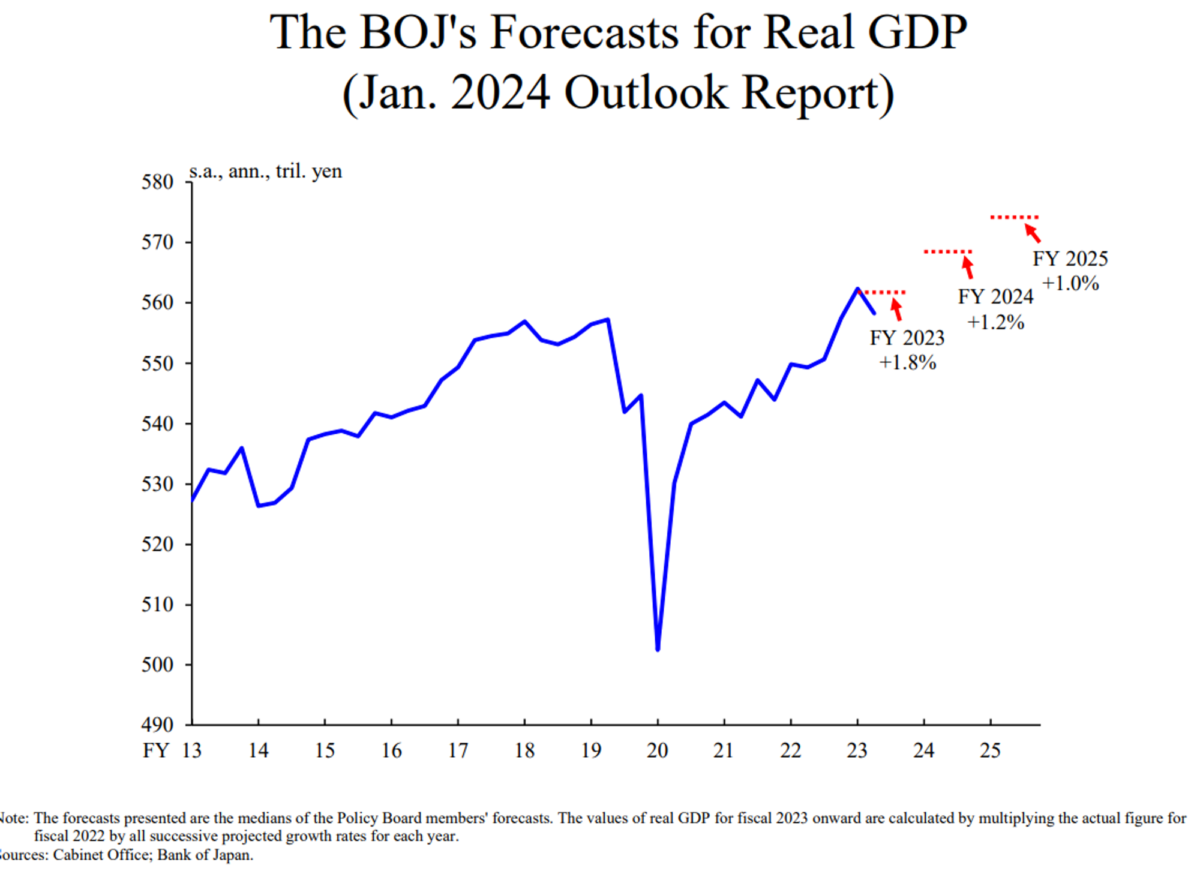
First, please refer to Figure 1. **The Japanese economy has been recovering modestly and is expected to grow at a pace exceeding its potential growth rate.** For fiscal years 2023–2025, Japan’s economic growth is projected to be 1.8%, 1.2%, and 1.0%, respectively.
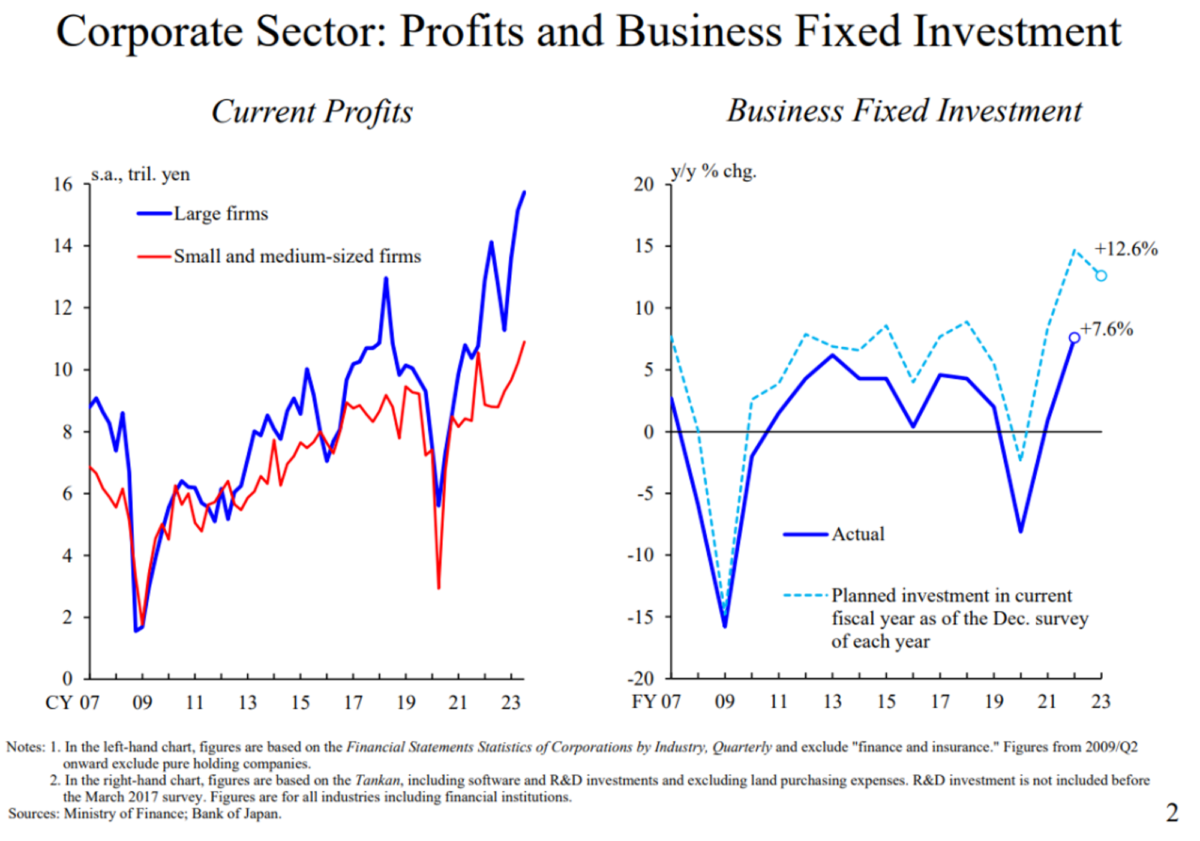
As shown in Figure 2,Japanese corporate profits have reached a record high, including large corporations and small and medium-sized enterprises. In this context, and taking into account companies’ fixed investment plans, the year-over-year growth rate of investment for fiscal year 2023 is projected to be 12%, with the largest share coming from investments related to alleviating labor shortages, decarbonization, and digitalization.
At the same time,The pace of recovery in overseas economies has slowed somewhat, but they are still expected to grow moderately., although there are differences among countries and regions. As shown in Figure 3, inflation in the United States has fallen to approximately 3%, while no significant economic slowdown has been observed; a soft landing has become the market’s prevailing expectation. Given that it will still take time for inflation to return to the 2% target level, it remains necessary to remain vigilant,However, I believe the tension between economic growth and inflation has eased, which to some extent contributes to the flexibility of monetary policy.. The Chinese economy is facing adjustment pressures in the labor and real estate markets. At the same time, China has ample room for maneuver in its monetary and fiscal policies, and it remains to be seen whether it can utilize this policy space to make the necessary adjustments and achieve stable growth.
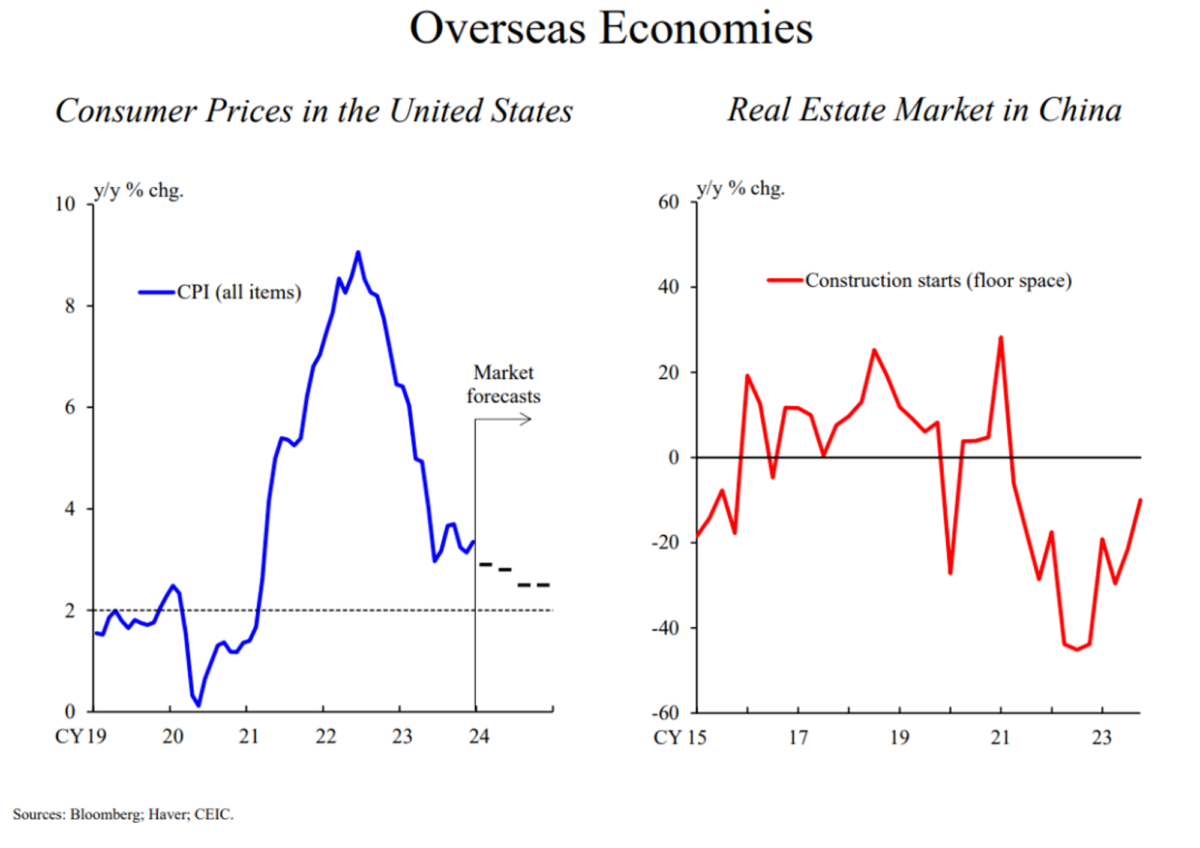
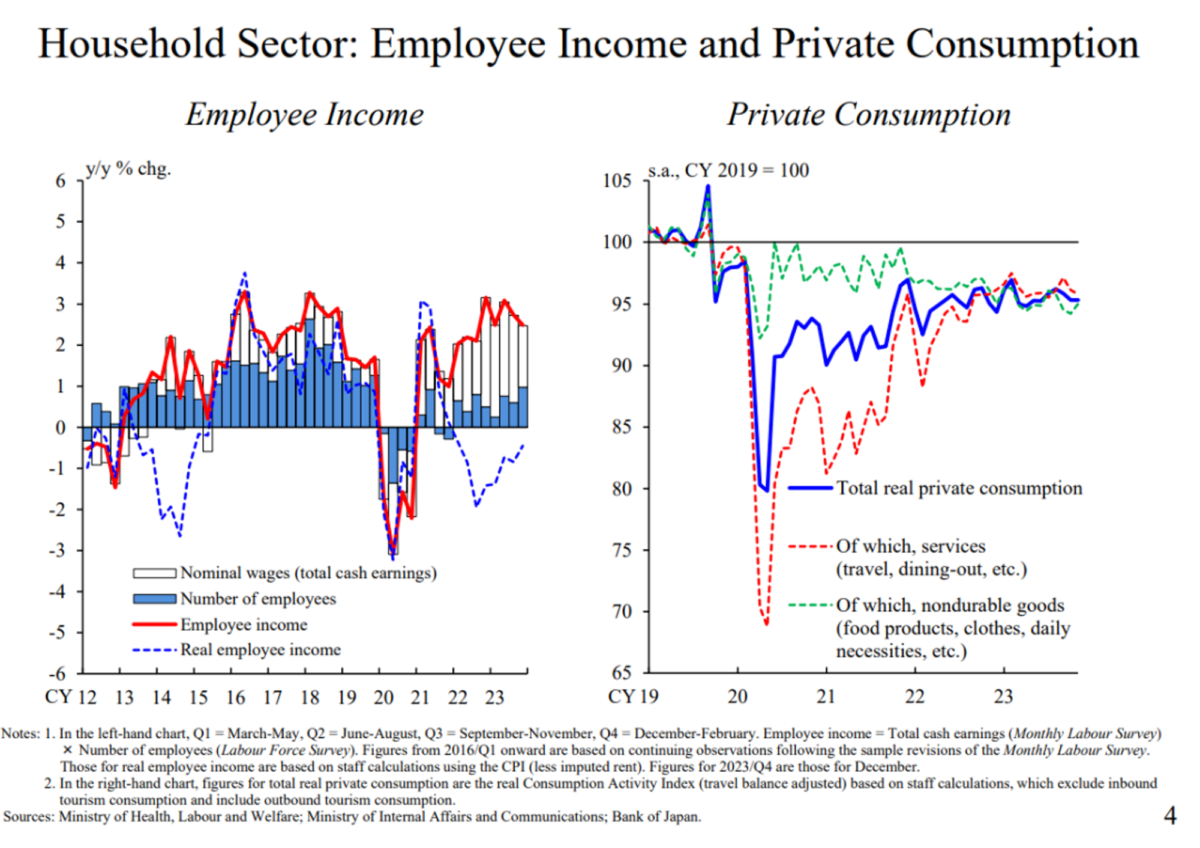
Figure 4 shows the situation in Japan’s household sector. Largely due to growth in nominal wages, the income of corporate employees has risen, but has not kept pace with inflation. As for private consumption, service spending—such as travel and dining out (red line)—has increased as pent-up demand from the pandemic was released. On the other hand, impacted by sharp increases in the prices of food and daily necessities, households have adopted a defensive stance toward spending in these areas—for example, by switching to cheaper products—which has led to a contraction in non-durable goods consumption (green line). Currently, the growth rate of overall private consumption (blue line) remains moderate. Looking ahead,Given that the release of pent-up demand will gradually subside, a key factor affecting private consumption is the improvement in household income driven by wage increases.
Next, let’s discuss wages and prices. As shown in Figure 5, in December 2023, Japan’s Consumer Price Index (CPI), excluding fresh food, rose 2.3% year-over-year. Specifically, largely due to government measures aimed at alleviating the burden of rising energy prices on households, energy (white) made a negative contribution to CPI growth. As the pass-through of corporate cost increases peaked and began to ease, the contributions of food (light blue) and other goods (dark blue) to CPI growth declined. On the other hand, the contribution from the services sector (pink) continued to rise modestly. The main driver of higher service prices was rising hotel costs fueled by expanding inbound tourism demand, though prices for other services also began to increase gradually.
(January 2024 “Report on the Outlook for the Economy and Price Trends”)
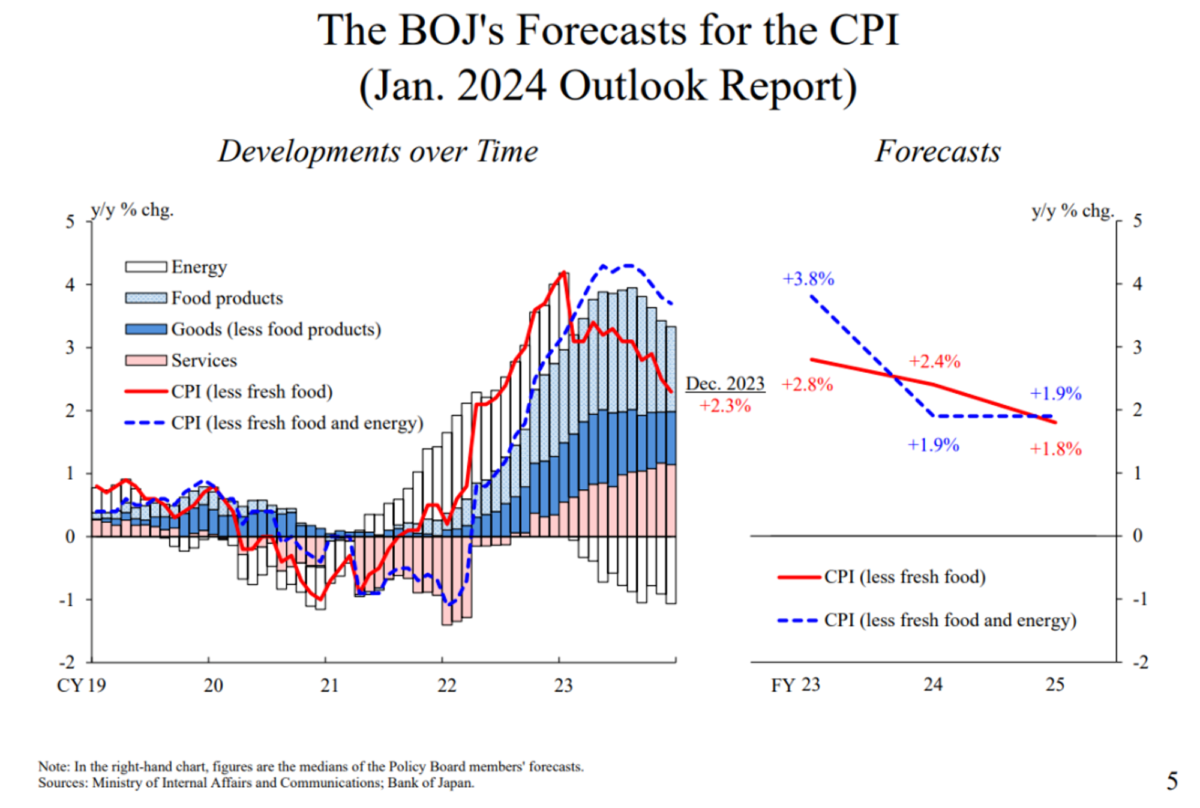
As for the inflation outlook, we expect that,Although the pass-through of rising costs will continue to weaken, prices for services and other goods will rise in line with wage growth.. By fiscal year 2025, supported by a virtuous cycle between wages and prices, the underlying inflation rate is likely to gradually rise to 2%. As the primary drivers shift, Japan’s year-over-year CPI growth (excluding fresh food) is projected to reach 2.8% in fiscal year 2023, after which it is expected to decline to around 2%. Specifically, it is projected to be 2.4% in fiscal year 2024 and 1.8% in fiscal year 2025.
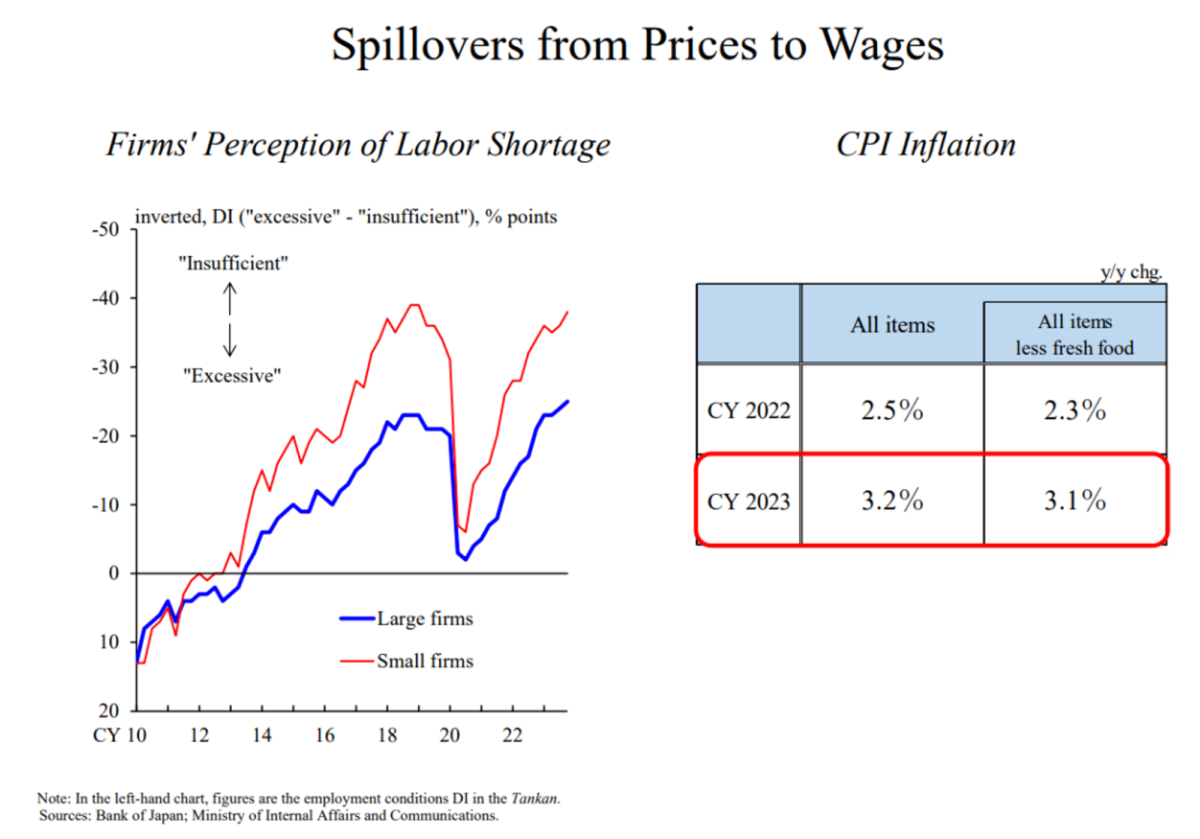
To realize this outlook, we need a virtuous two-way cycle between wages and prices—including the flow from prices to wages and from wages to prices. Regarding the first direction, **the question is whether wages will rise as prices climb. In this regard, from a macroeconomic perspective, Japan’s situation is more favorable than it was last year. **As mentioned earlier, corporate profits have remained at high levels, and as shown in Figure 6, companies are facing an increasingly acute labor shortage. By the time annual spring wage negotiations take place, the previous year’s CPI data has already been released and can serve as a reference. The CPI increase for 2022 was 2.5%; for 2023, it was even higher at 3.2%.
At a meeting of general managers from the Bank of Japan’s regional branches held last month, several managers noted that companies have begun accelerating wage increases earlier this year than last year. However, uncertainty remains in this regard, as many companies maintain that they must consider factors such as the actions of their competitors when determining specific wage increase levels. The “January 2024 Regional Economic Report,” released on the day of the meeting, summarizes the views of companies across various regions. The Bank of Japan will continue to gather relevant information through its nationwide network comprising the head office, regional branches, and local offices. In addition, updates on the progress of the annual spring labor-management wage negotiations will be released in due course, at which time we will see the exact figures. The Bank of Japan will carefully examine the wage increase situation, including the points mentioned earlier.
The second area of focus is whether firms will factor wage increases into their selling prices. As shown in Figure 7, although firms’ outlook for selling prices over the next year has declined as raw material costs have fallen, their expectations for selling prices over the next five years remain relatively high. It appears that **firms are incorporating expectations of continued labor cost increases into their pricing behavior. **Furthermore, the CPI changes discussed above indicate that service prices have risen moderately in recent times.**
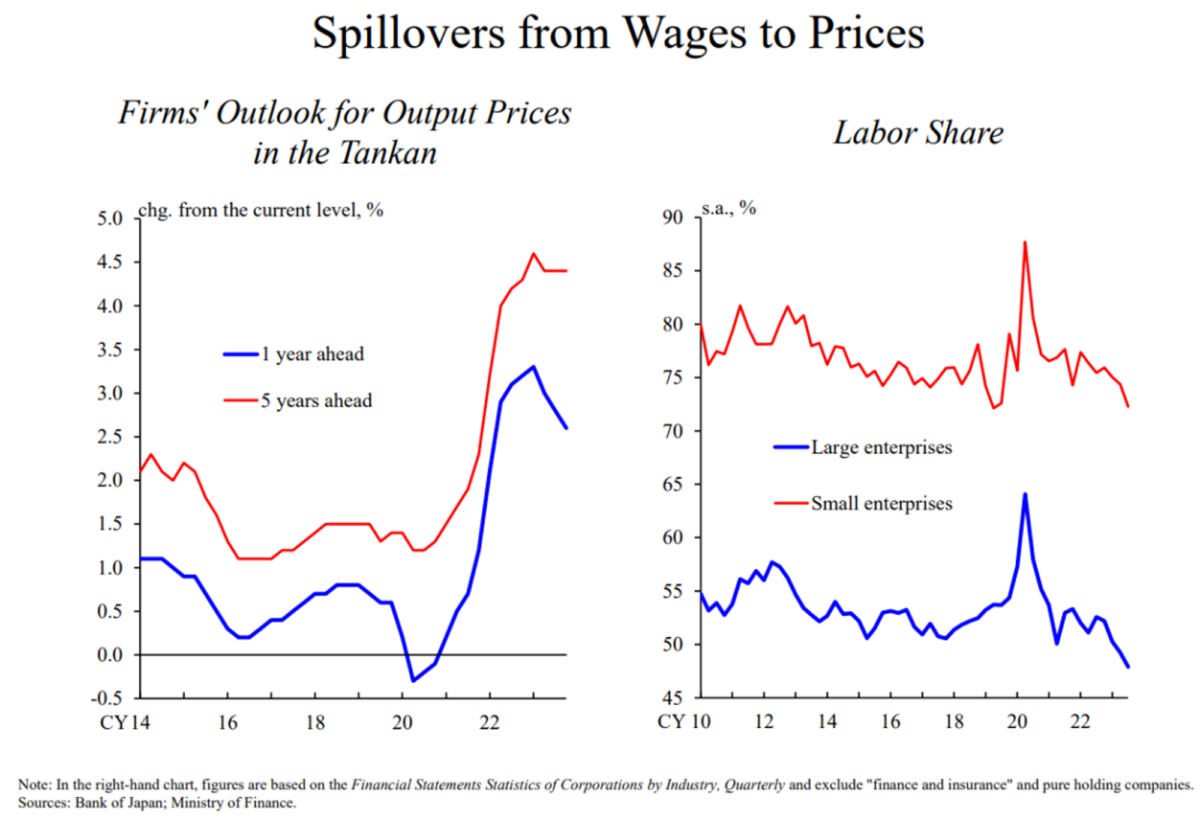
On the other hand, according to feedback from companies, unlike raw material costs, rising labor costs are difficult to pass on to sales prices. I believe many companies are indeed facing this challenging situation. Nevertheless, **corporate profits remain at high levels, and data on the share of labor income indicate that, at least from a macroeconomic perspective, labor costs have been passed on to some extent. **Recently, the labor income share has declined somewhat, including among small businesses. If companies were completely unable to pass on the wage increases from last spring to their prices, their profits would shrink and the labor income share would increase. I believe this suggests that the situation may vary from company to company and underscores the importance of appropriately passing on costs in business-to-business transactions.
In the second area, no single event can compare to the annual spring labor-management wage negotiations. However, we also make a comprehensive assessment based on factors such as price changes (primarily in service prices) and fluctuations in private consumption that drive those price changes. Furthermore, feedback from branch managers has given me the impression that industries and companies able to pass on wage increases to prices tend to offer more substantial pay raises. While this may seem obvious, it indicates that,Progress in the first area and progress in the second area are two sides of the same coin. Based on this, I believe we need to examine both areas simultaneously.The
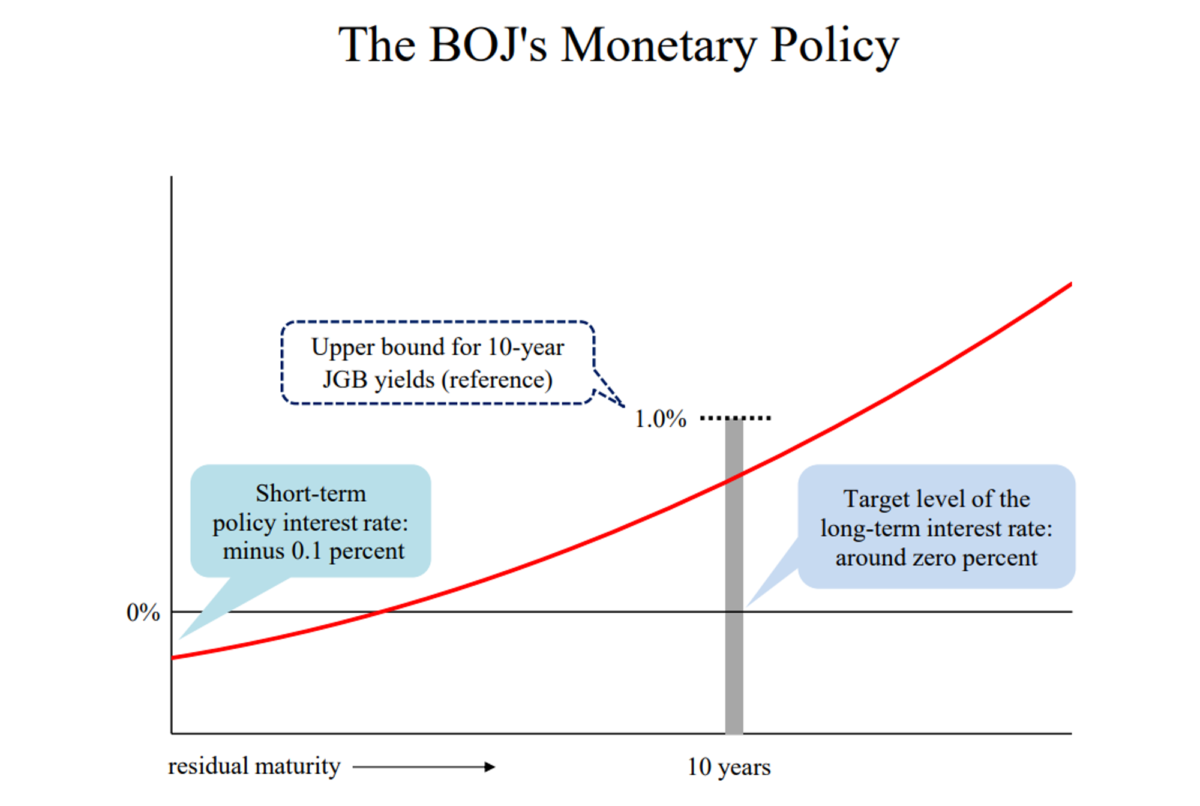
Next, I will explain the Bank of Japan’s monetary policy actions. Please refer to Figure 8. Over the past two years or so, the year-over-year increase in the CPI has consistently exceeded the Bank of Japan’s 2% target. However, this has been driven primarily by cost-push factors originating overseas, which is not what we would like to see. Our goal is to achieve the 2% target in a sustainable and stable manner, while also raising wages. To this end, the Bank of Japan has continued to implement large-scale monetary easing, setting the short-term policy rate at -0.1% and maintaining long-term rates at low levels under the Yield Curve Control (YCC) framework.
As mentioned earlier, we expect that by fiscal year 2025, both the year-over-year growth rate of the core CPI (excluding fresh food) and the “core-core CPI” (further excluding energy) will reach approximately 2%. This forecast is based on the fundamental assumption that the Japanese economy will continue to recover moderately and that the virtuous cycle between wages and prices will strengthen. In other words, we expect to be able to achieve the 2% inflation target in an ideal manner, accompanied by wage growth. Although there remains a high degree of uncertainty regarding future developments, the likelihood of this scenario materializing has been gradually increasing.
Looking ahead, we will carefully analyze various data and information to monitor progress toward achieving a virtuous cycle between wages and prices. On this basis,If the prospect of achieving the 2% goals in a sustainable and stable manner is now within sight, it can be said that the large-scale stimulus measures have served their purpose, and the Bank of Japan will then consider whether to adjust its policy.. Given that this large-scale easing policy has been in place for more than a decade, regardless of the timing of any policy adjustments, the Bank of Japan needs to carefully design its communication strategy and market operation plans to avoid disrupting the continuity of financial market operations before and after such adjustments. From this perspective, the Bank of Japan must explain as clearly as possible the underlying rationale behind any potential adjustments to specific measures. In the following sections, I would like to share my current views in response to questions frequently raised by economists and journalists recently.
The first question is: if the Bank of Japan were to exit its negative interest rate policy, how should it set its short-term policy rate? Prior to the introduction of negative interest rates, the Bank of Japan applied an interest rate of 0.1% to excess reserves held by financial institutions in their current accounts at the central bank. The unsecured interbank lending rate in the money market ranged between 0.% and 0.1%, which was the result of arbitrage transactions between financial institutions holding accounts at the central bank and those that did not.If the Bank of Japan were to restore interest rates to the aforementioned level, that would mean raising rates by 0.1 percentage points., because the current unsecured interbank lending rate falls within the range of -0.1% to 0.0%. This issue primarily concerns how to maintain the functioning of the money market.
As for the impact on the economy, a more critical issue is the future path of short-term policy rates. The Bank of Japan’s basic approach is to assess the current state and outlook for economic activity and prices, and then set the policy rate at an appropriate level to maintain the CPI at the target range of around 2%. On this basis,The actual path will, of course, depend on future economic and price trends.
Nevertheless, given the outlook outlined above, it is difficult to imagine that the Bank of Japan would continue to raise interest rates rapidly even if it were to exit its negative interest rate policy. I believe that **even if the negative interest rate policy is phased out, we will maintain an accommodative financing environment.** As shown in Figure 9, current market expectations for the policy rate path are very gradual. When formulating assumptions regarding the policy interest rate, the Bank of Japan takes market expectations into account to clarify its outlook for economic activity and price trends. Nevertheless, the Bank of Japan does not anticipate inflation to rise significantly above the 2% level. As shown in Figure 10, currently,Japan's real interest rates remain firmly in negative territory, and financing conditions are highly accommodative. This situation is not expected to change significantly.
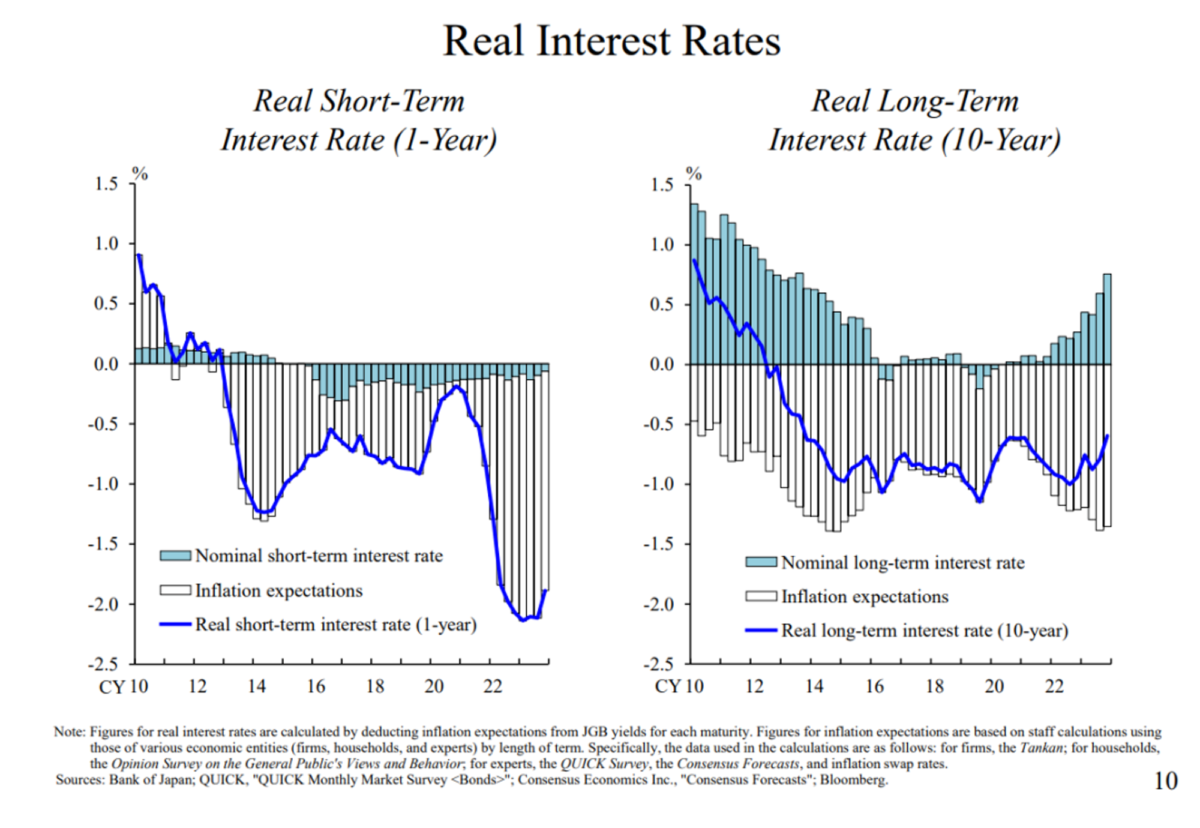
On the other hand, some observers (particularly those in overseas markets and among economists) argue that, given an inflation rate of 2%, the nominal neutral interest rate should be 2% even if the real natural interest rate is 0%. Alternatively, based on this, some argue that using simple methods such as the Taylor Rule to calculate the appropriate policy interest rate would yield a higher figure.
I don’t want to discuss here which view is correct; I’d like to reiterate that it depends entirely on future economic trends and price movements. Based on this, I believe that,It can be somewhat difficult to assess the situation in Japan by drawing comparisons with Europe and the United States.
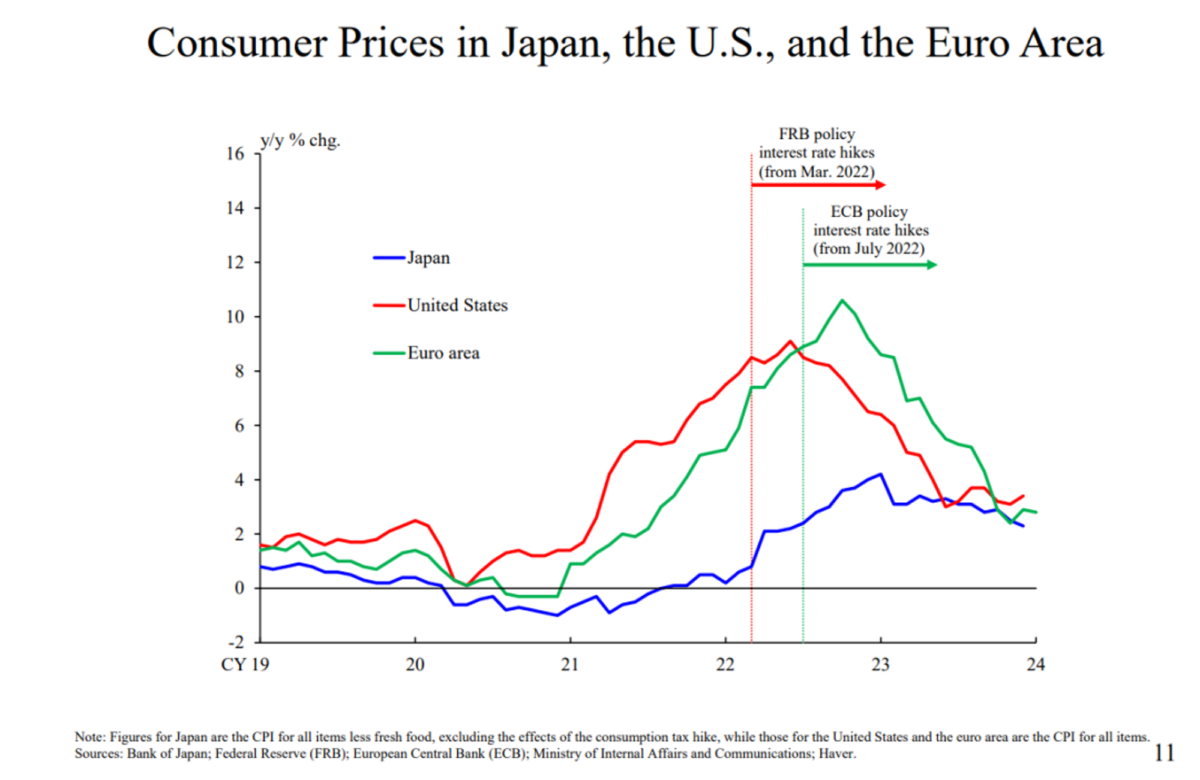
As shown in Figure 11, looking at the situations in the United States and the Eurozone, when the Federal Reserve and the European Central Bank began raising policy interest rates in 2022, inflation in both regions had exceeded 8%, posing a significant risk of undermining market confidence in the ability to achieve the 2% inflation target over the medium to long term. Japan’s current inflation situation, however, is markedly different.
Another difference from Europe and the United States is that medium- to long-term inflation expectations in those regions have consistently been anchored at 2%,Meanwhile, inflation expectations in Japan are still in the process of rising (from levels below 2%) toward 2%. This means that accommodative monetary policy must be maintained to further raise inflation expectations, while remaining vigilant against the risk of inflation falling again.
Factors influencing Japan’s financial markets appear to include these inflation-related factors—which differ from those in Europe and the United States—the fact that inflation expectations have not yet been anchored to the “2%” target, and the uncertainty associated with these factors. Conversely, if Japan’s inflation-related factors were to change in the future—which is precisely the Bank of Japan’s objective (as detailed below)—market views might also shift accordingly, depending on various factors such as the pace of change. Furthermore, it can be said that the Bank of Japan will maintain an accommodative monetary environment while adjusting Japan’s inflation-related factors.
2. Purchases of assets such as yield curve control (YCC) and exchange-traded funds (ETFs)
Another issue concerns possible revisions to the YCC framework. Since the YCC framework is a form of quantitative easing (QE) implemented through the purchase of government bonds, simply exiting the YCC framework is not the end of the story.Regardless of whether the framework is terminated or continues in some form, the Bank of Japan must consider how to proceed with future purchases of Japanese government bonds (JGBs) and how to maintain market stability in the process.
In this sense, the implementation of the YCC and subsequent purchases of Japanese government bonds are all part of an ongoing process. Under the current framework, the scale of bond purchases is determined endogenously by anchoring the interest rate level. If the Bank of Japan were to terminate or alter this framework, it would need to consider the optimal approach to bond purchases, taking into account prevailing market conditions and forecasting future trends. Of course, if the YCC framework were to be revised, the Bank of Japan would be more inclined to let the market determine interest rate levels; however, it would also take cautious measures during this process to avoid disrupting the continuity of market operations before and after the revision, and to ensure that the scale of bond purchases does not fluctuate sharply and that interest rates do not rise rapidly.
In addition, as part of its large-scale monetary easing policy, the Bank of Japan has also purchased ETFs and Japanese real estate investment trusts (J-REITs). However,Once the 2% inflation target is within reach on a sustainable and stable basis, and the Bank of Japan adjusts its large-scale monetary easing policy, purchases of ETFs and J-REITs will naturally come to an end.
In this regard, three years ago—in March 2021—the Bank of Japan revised its asset purchase guidelines to prioritize flexible purchases during periods of market instability. Since then, the scale of these purchases has remained small; last year, the Bank of Japan purchased 210 billion yen worth of ETFs but did not purchase any J-REITs.** Even if the Bank of Japan were to halt these purchases and leave pricing entirely to market forces, the impact on market conditions and other factors would likely be minimal. **Of course, the disposal of the ETFs and J-REITs already held by the Bank of Japan is another matter: given the enormous scale of the assets involved, the Bank of Japan will need more time to consider this issue.
Now let's move on to the next issue.The Japanese economy is at a critical turning point in its efforts to overcome deflation. Below, against the backdrop of Japan’s economic history since the 1990s, I will outline and discuss the changes currently taking place and their impact on business operations.
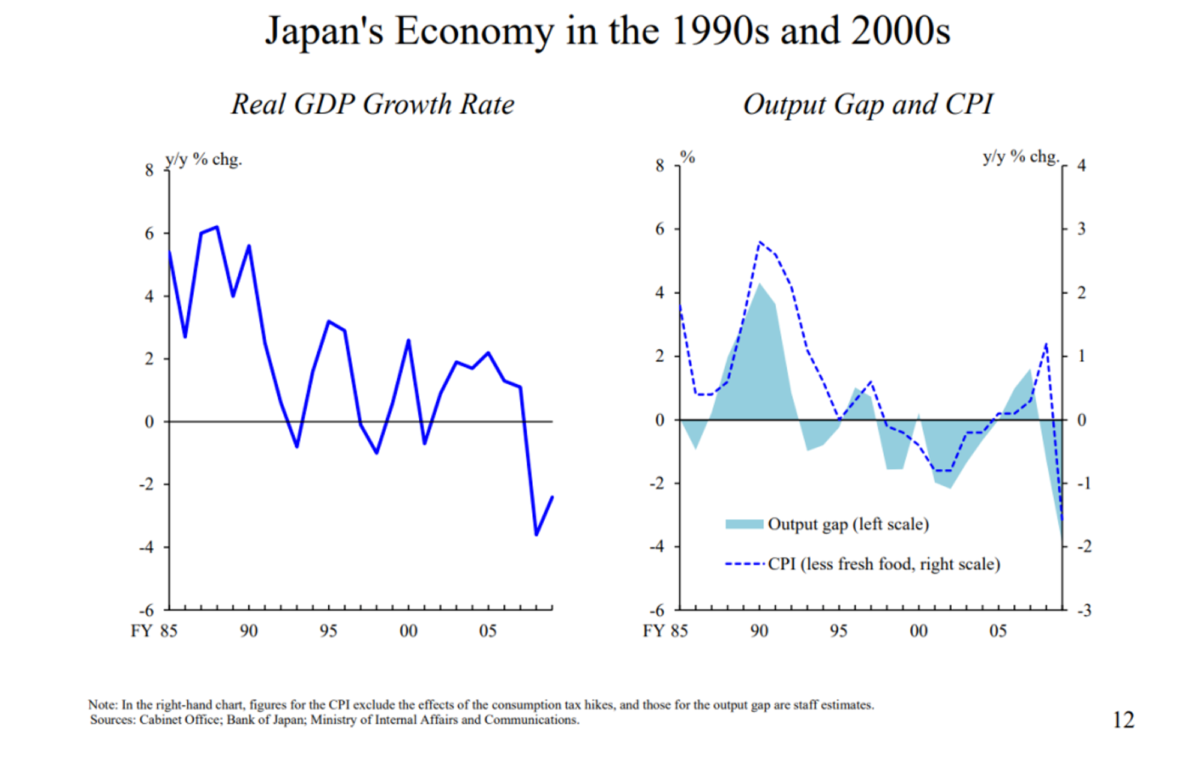
See Figure 12. In the 1990s, Japan experienced the bursting of its economic bubble and the ensuing financial crisis. At the same time, Japan was also grappling with the challenges of a shrinking population and adapting to globalization driven by the rise of emerging economies. As a result, Japan’s economic growth slowed, and the country fell into a prolonged period of weak demand. In 1998, Japan’s inflation rate turned negative, and deflation persisted for 15 years.
In terms of monetary policy, even lowering interest rates to 0% failed to produce sufficient easing effects and did not boost inflation. The Japanese government undertook massive fiscal spending to offset the shortfall in demand and implemented various subsidy and public credit programs to prevent corporate bankruptcies and protect jobs. Under these circumstances, companies naturally sought to protect themselves by accumulating internal reserves and hoarding cash and deposits, rather than engaging in forward-looking investment. In particular, the 2008 Global Financial Crisis (GFC) dealt a severe blow to companies that had previously chosen to take risks, including in the area of investment. This further reinforced the trend toward a contractionary equilibrium, as companies began to focus on adjusting their cost structures to withstand future shocks rather than on business expansion.
Clearly, the fundamental solution to this problem is to boost Japan’s growth potential. However, this will take time. Meanwhile, the 2011 Great East Japan Earthquake compounded the complexity of this issue, giving rise to what is known as the “six headwinds.”
Against this backdrop, the Bank of Japan explored all possible countermeasures and, building on the Quantitative and Qualitative Monetary Easing (QQE) program launched in 2013, implemented large-scale monetary easing policies. When both potential economic growth and inflation expectations are low, the neutral interest rate becomes very low. Therefore, for monetary easing to be sufficiently effective, interest rates must be lowered significantly. The Bank of Japan had to find a way to overcome the zero lower bound on nominal interest rates. **To do so, it had to either lower short-term interest rates into negative territory or suppress medium- and long-term rates. Ultimately, the Bank of Japan did both.** Of course, these measures also have side effects, and it would be best to avoid resorting to them if possible. However, failing to take these measures would bring us back to the question of “what to do.”
Furthermore, on the international front, the Federal Reserve introduced quantitative easing (QE) following the global financial crisis, and many other central banks have also implemented unconventional policies. I believe that, from a historical perspective, the extent to which the central banking community as a whole should have pursued these unconventional policies is a matter worthy of reflection. Nevertheless, individual central banks have no choice but to operate in accordance with their specific circumstances.
Considering the situation both domestically and internationally, I believe that refraining from taking unconventional measures is not an option for the Bank of Japan. Of course, we will weigh the positive effects and side effects of specific policy measures and assess their appropriateness without any bias.
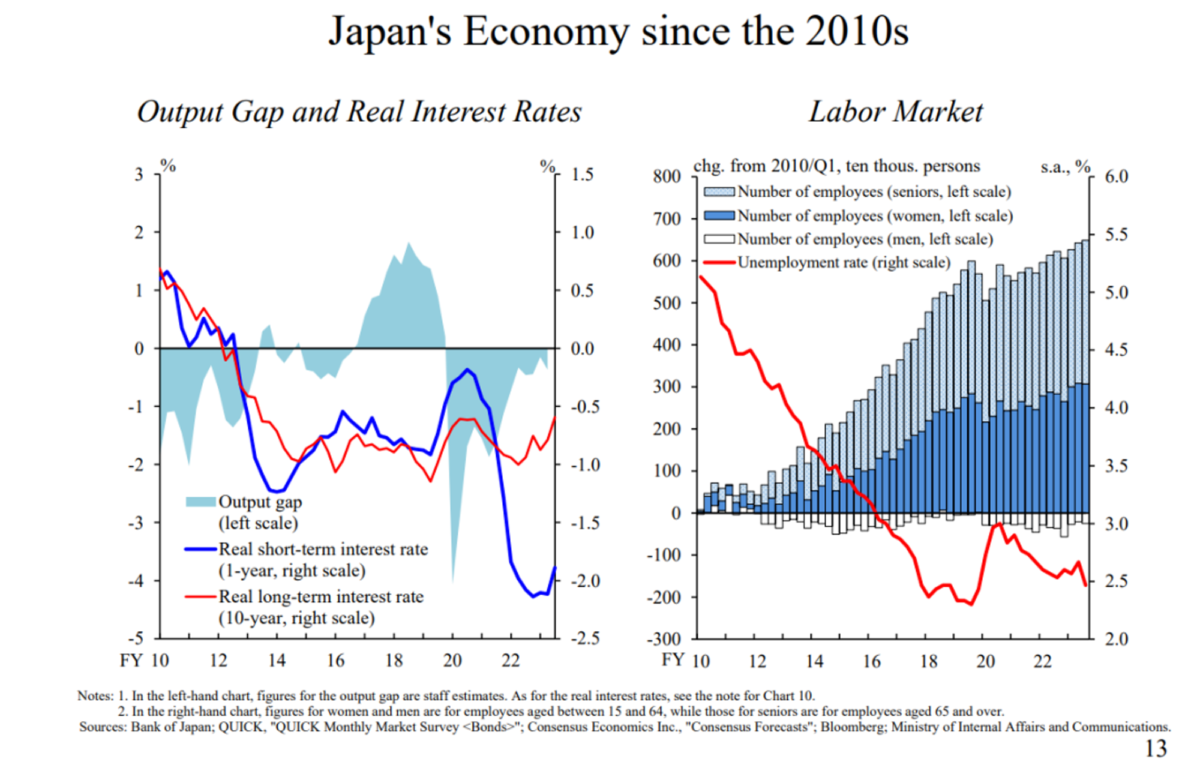
As shown in Figure 13, under the QQE program and the subsequent negative interest rate and YCC policies, both short-term and long-term real interest rates in Japan were significantly negative. Although the natural interest rate was very low, these policies created a fairly accommodative financing environment.As a result, the shortage of demand was resolved, and the unemployment rate fell significantly.
In terms of labor supply, the labor force expanded significantly as labor force participation rates among women and older adults rose. Subsequently, the scope for boosting labor supply in this way gradually narrowed, and Japan began to experience labor shortages during the 2017–2018 period, prior to the outbreak of the COVID-19 pandemic.
As mentioned earlier**, monetary easing has significantly stimulated the economy, boosted demand, and tightened the labor market, thereby prompting economic actors such as businesses to take corresponding actions**. This is precisely the objective of the Bank of Japan’s large-scale easing policy. This approach can be described as a “high-pressure economic strategy.” From the very earliest stages of large-scale monetary easing, the Bank of Japan has argued that competition for human resources would inevitably intensify in the fight against deflation, and that companies taking the initiative to adapt to these changing conditions would gain a competitive advantage. Since this trend takes time to gradually emerge, the Bank of Japan’s communication may have been premature and was not factored into corporate decision-making at the time; however, labor shortages have ultimately become a major trend in Japan.
In fact, the response to labor shortages may serve as a driving force for corporate transformation and productivity gains. For example, an increasing number of companies are stepping up their investments to reduce labor requirements and have discontinued redundant services that are inefficient or unprofitable. Although these initiatives were subsequently complicated by the COVID-19 pandemic, they have likely become an ongoing underlying trend.
The post-pandemic recovery has triggered global inflation, and Japan, like other countries and regions, is facing upward pressure on prices driven by cost-push factors. Of course, this is not a situation we would have wished for, but it was the reason companies offered pay raises last spring amid labor shortages. Against this backdrop, the current tight labor market is unlikely to change. Companies will need to take this into account in their business operations, including when formulating pricing strategies.
At this point, we are finally beginning to see a way forward on the fundamental issue of how to boost Japan’s potential economic growth rate. While labor shortages may pose a headache for companies, they also present opportunities. Specifically, from the workers’ perspective, labor shortages help drive corporate transformation and improve the economy’s dynamism; furthermore, they prompt companies to establish profitable business models that allow for sustained wage increases and to make efforts to attract workers.
Of course, capitalism necessarily involves competition, which means that not everyone will benefit. The term “economic metabolism” usually carries positive connotations and, at least in my view, is often used somewhat superficially, but the harsh reality is that it means some companies will inevitably exit the market. Some companies look back on the deflationary era with nostalgia, because back then, as long as they didn’t expand excessively, they could survive. However, in such a stagnant environment, we cannot expect the Japanese economy as a whole to regain its growth potential amid a shrinking population. Therefore,I believe a realistic solution is to promote economic renewal with minimal transition costs.. The transition costs associated with economic restructuring caused by labor shortages are relatively low, as they are unlikely to exacerbate unemployment.
However, not every worker can find a new job right away, so this turnover will still cause some growing pains. In this sense, it is very encouraging that, recently, an increasing number of companies have been pursuing mergers and acquisitions and business succession because they are attracted to the employees of their target companies.I hope regional financial institutions can leverage their local networks.... They have close ties to the local community—including a large number of local businesses.
In Japan’s fight against deflation, there is a widespread belief that wages and prices will not rise or change; this social behavior and the prevailing norm act as a constraint on corporate business strategies.. Companies believe that, under these persistent deflationary conditions, it is difficult for them to move toward offering higher-quality products and raising prices. However, it is not yet clear through what channels these conditions are having a negative impact on the economy. In theory,Regardless of the overall inflation rate, it should be possible for the relative prices of individual products to adjust.
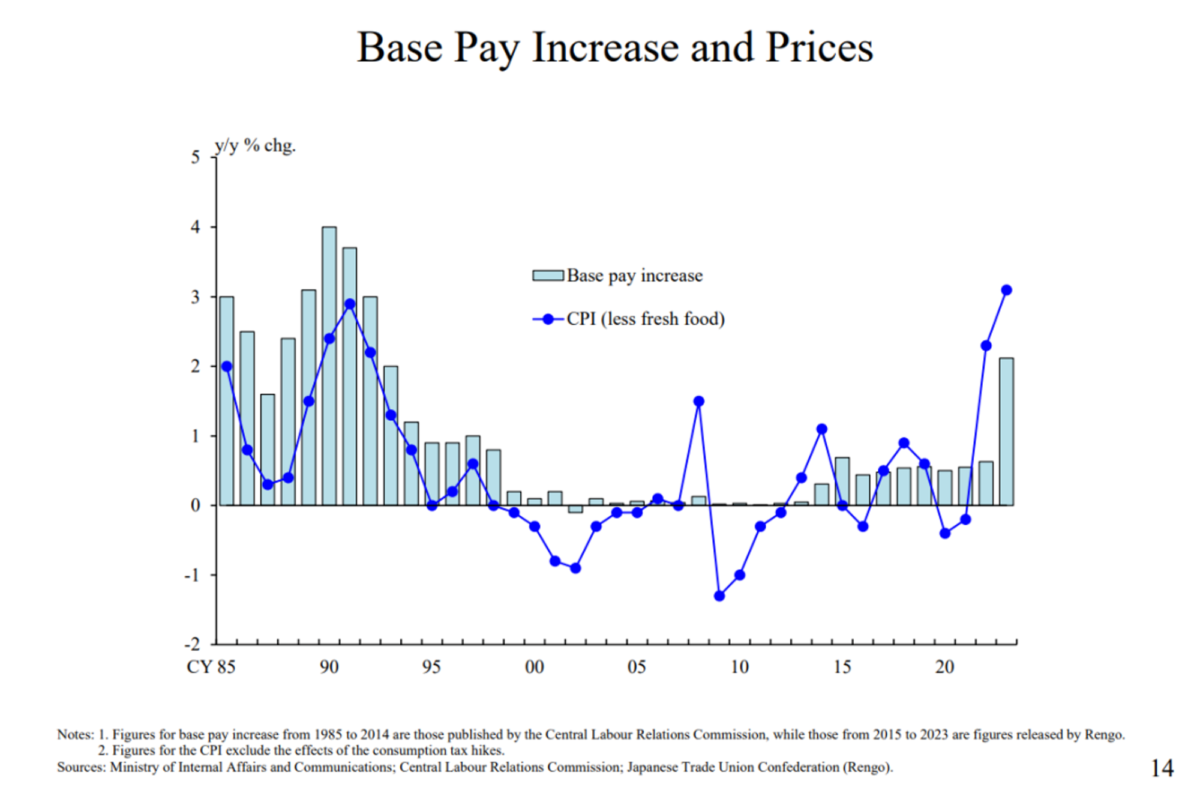
Please see Figure 14. One possible explanation is that,Changing this status quo would make it easier for companies to adjust wages. Even now, some companies occasionally indicate that, because raising base wages would increase fixed costs, they would opt to pay the wage adjustment as a one-time lump sum. This mindset is based on the assumption of deflation or zero inflation. In economies where the annual inflation rate hovers around 2%—such as Europe, the United States, and Japan in the 1980s—even if a company raises base wages too much in a given year, it does not increase its fixed costs, as it can compensate by adjusting the base wage increase for the following year. Furthermore, if overall nominal wages are rising annually, a company will be able to adjust wages more flexibly based on its business performance or considerations such as attracting young people or professionals. This may be one benefit that a shift away from the aforementioned deflationary norm could bring. However, I am not entirely convinced that this alone would be sufficient to transform the situation of society as a whole.
Although the term “deflationary norm” usually refers only to a situation where wages and prices do not rise, I believe it is important to recognize that,This normal state is actually more complex and involves underlying economic, social, and political structural issues.. These factors include intense competition among businesses and chronic shortages of demand, loose labor market conditions and employment anxiety, as well as various safety nets that enable businesses to stay afloat.
In my view, a decisive factor is that “companies can hire workers without raising wages.” Over the past decade, although the Japanese economy has emerged from deflation, it has been extremely difficult to overcome this new normal. I believe the reason behind this lies in the fact that,It took a long time for the remaining room for expansion in the labor supply to be gradually exhausted; it was only after that point that a true “labor-shortage economy” emerged.The



 English
  简体中文
简体中文  香港中文
香港中文  日本語
日本語  Español
  Português
  Français