
China's Hong Kong stock market crash triggers a wave of brokerage firm closures
2023-12-15The Inside Story of Teresa Teng's Secret Relationship with Xinhua News Agency's Hong Kong Branch
2023-12-18Source: Times Weekly | Author: Liu Muxuan
2023 was a year that saw the concert industry boom, and American singer Taylor Swift (nicknamed “Swift”) is the leading figure in this phenomenon.
On December 6 local time, Taylor edged out OpenAI founder Sam Altman, the favorite to win the title, to grace the cover of *Time* magazine and be named the publication’s Person of the Year for 2023.
“Taylor Swift has found a way to transcend borders and become a beacon of light,” said Sam Jacobs, editor-in-chief of *Time* magazine. “Taylor is both the author and the protagonist of this story.”
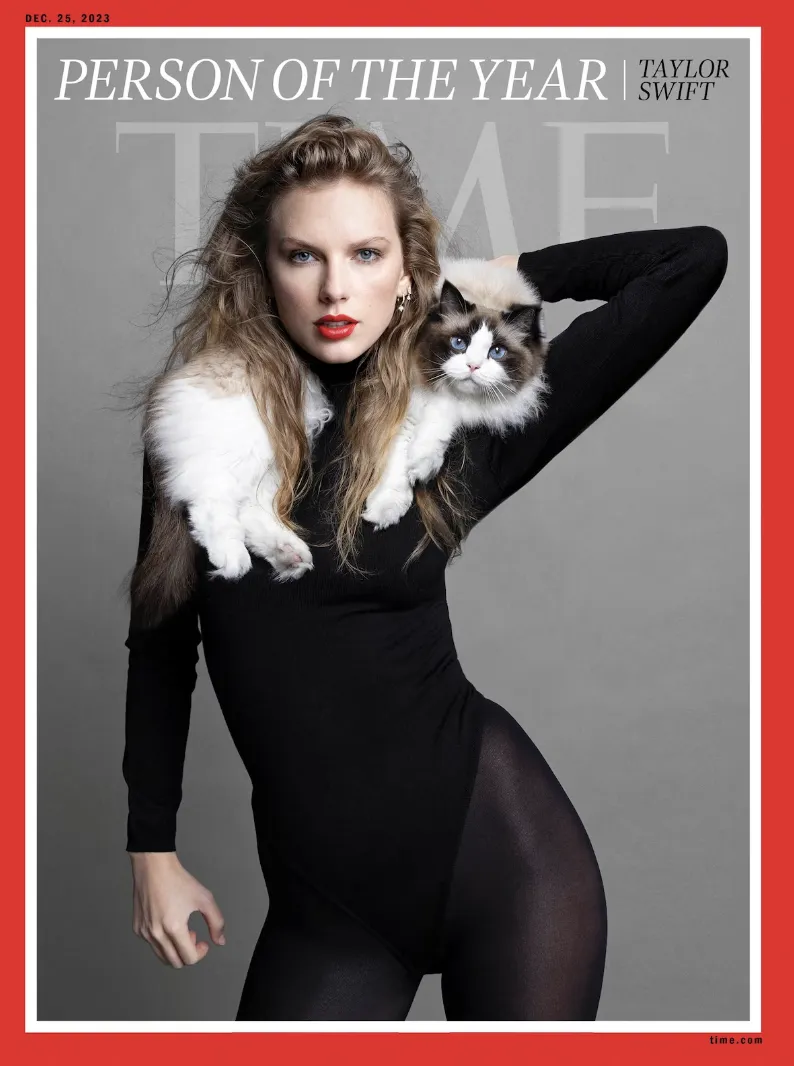
AI can’t save the global economy, but consumer spending certainly can. (Image source: *Time* magazine)
Taylor's sixth world tour—the Eras Tour—kicked off on March 17 of this year and is scheduled to include 151 shows worldwide, running through the end of 2024.
With just 52 concerts held in the United States alone, hotels were fully booked wherever she went, consumer spending was robust, and there was even a severe shortage of temporary workers. This series of economic effects has been dubbed “Taylor Economics” by the American media.
This is precisely the scenario that U.S. economic policymakers had been hoping for. While the Biden administration’s multiple rounds of trillion-dollar economic stimulus packages failed to significantly boost consumer spending, “Taylor Swift economics” has succeeded.
The Federal Reserve Bank of Philadelphia, one of the 12 Federal Reserve Banks, stated in its July Beige Book that, “ ”Although the overall recovery in the tourism sector has slowed, May was the strongest month for revenue in the Philadelphia hotel industry since the pandemic began, largely due to the influx of fans attending Taylor Swift’s concert."
Boost consumer spending by 70 billion
“If Taylor Swift were an economy, her economic output would exceed that of 50 countries,” said Dan Fleetwood, president of the data analytics firm Question Pro.
A report released by the organization in June has been widely cited as evidence that “Taylor Swift Economics” has successfully stimulated the U.S. economy. The report estimates that the economic impact of the "Taylor Era" tour on the U.S. economy could reach as high as $5 billion (approximately 35.9 billion yuan).
At that time, Taylor had only completed just over half of her U.S. tour dates.
In October, the U.S. Travel Association noted in a report that the figure of $5 billion was still a conservative estimate. The organization estimated that, when factoring in the upstream and downstream industries related to the tour as well as fans’ online spending, the total economic impact of Taylor’s concerts could exceed $10 billion (approximately 71.8 billion yuan).
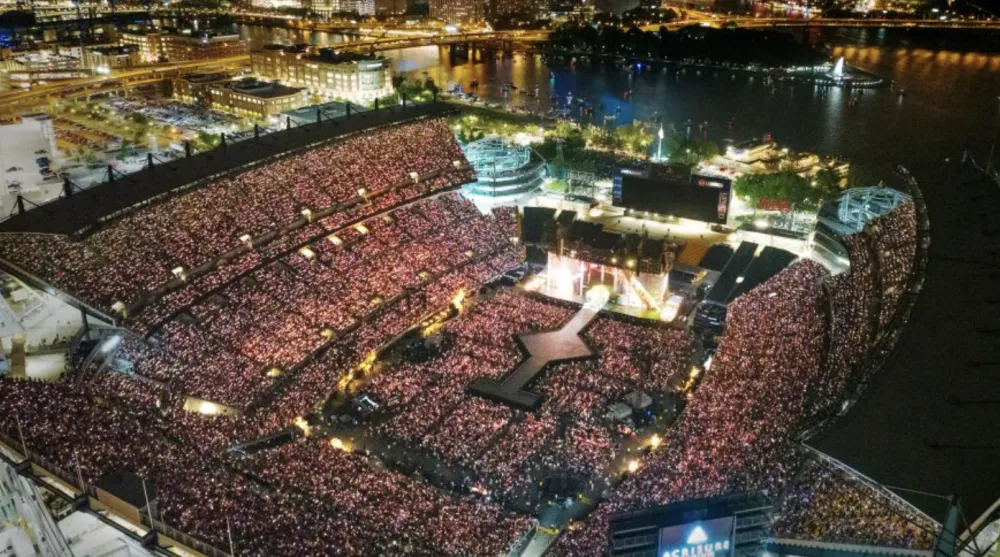
Taylor's concert drew massive crowds. (Photo credit: Taylor Swift's official website)
Every city on the “Era” tour schedule has been amazed by the power of "Taylor Swift's economic impact."
According to *Time* magazine, every weekend Taylor holds a concert, the economic impact on the local area is equivalent to that of two or three Super Bowls.
“The Super Bowl is the annual championship game of the National Football League (NFL). It is the largest sporting event in the United States and the second-most lucrative sporting event in the world, surpassed only by the World Cup.
The average ticket price for the 2023 Super Bowl was $8,000 (approximately 57,440 yuan), but most of the revenue went into the pockets of the event organizers. In contrast, the lowest presale ticket price for Taylor Swift’s concert was just $49 (approximately 352 yuan), and the average ticket price for presales in the U.S. was only $456 (approximately 3,274 yuan).
In other words, a significant portion of the money fans “saved” on tickets ended up in the local economy.
According to the California Center for Employment and the Economy, Taylor’s six concerts in Los Angeles created 3,300 new jobs in the food service, retail, and security sectors, generating $320 million in economic impact. In smaller cities like Cincinnati, hosting Taylor’s concerts also brought a pleasant surprise: downtown hotel occupancy rates reached 98.1%, and hotel revenue doubled year-over-year.
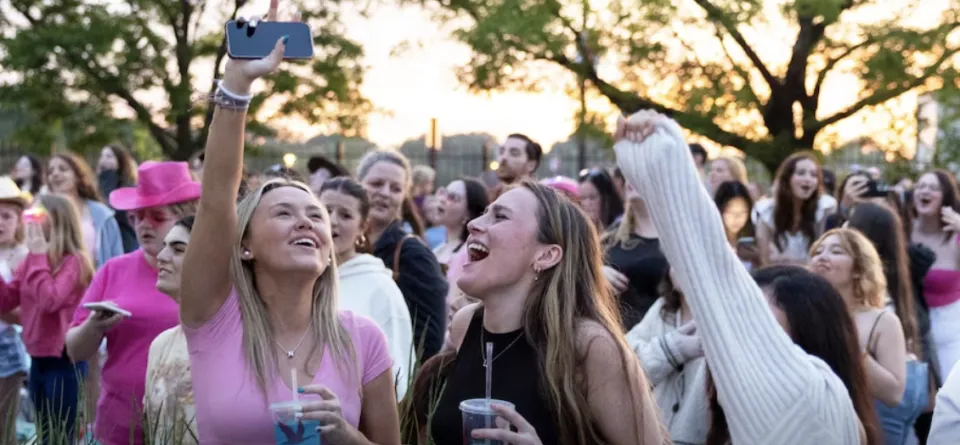
For fans who weren’t able to get tickets, Taylor has allowed them to listen to the music and join in on the tour from outside the venue. (Image source: social media)
“This isn’t just a story about music or a brand; she’s pioneering a new economic model,” said Egan, vice president of behavioral finance and investments at Betterment, a U.S. financial advisory firm.
Igan pointed out that Taylor’s tour brought a rare influx of cash to the cities it visited, giving local governments the funds to maintain public infrastructure and enabling local businesses to hire more employees, ultimately boosting overall consumer spending.
“The impact of ”Taylor Economics” has been widely recognized around the world. Not only have host cities proactively provided amenities to welcome Taylor’s fans and encourage them to spend money, but even cities and countries not on the tour itinerary have been rushing to invite Taylor to add extra shows. World leaders such as Chilean President Boric and Canadian Prime Minister Trudeau have even personally taken to social media to invite Taylor to bring her tour to their countries.
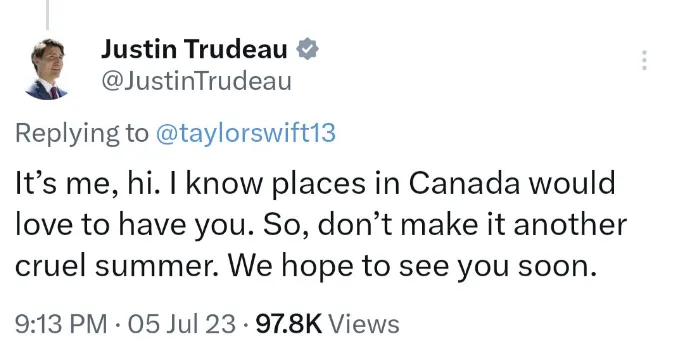
Canadian Prime Minister Trudeau personally invited Taylor to tour Canada (Photo source: social media)
After wrapping up her U.S. tour in August, Taylor is set to head to Europe for her next 48 shows.
In response, OTA Insight, a company specializing in hospitality industry data, has predicted that European cities hosting the tour could see economic benefits on a similar scale.
“Business Genius”
“The result of ”Taylor Economics“ is a ”win-win-win” situation for the host city, the fans, and Taylor herself—and this would not have been possible without Taylor’s own strategic management.
Taylor, who is 33 years old, is not only exceptionally talented musically, but also has an outstanding business acumen.
She released her debut album at age 16, and by age 26, she had set the Guinness World Record for the highest annual earnings by a female musician, with an annual income of $170 million (approximately 1.2 billion yuan).
According to a Bloomberg analysis, Taylor's net worth had already reached $1.1 billion (approximately 7.9 billion yuan) by late October of this year.
According to The Washington Post, Taylor’s “The Era Tour” is expected to generate $2.2 billion (approximately 15.8 billion yuan) in ticket sales in North America alone this year. Peter Cohen, an associate professor of management at Babson College, also estimates that by the time the tour concludes at the end of next year, Taylor will have earned as much as $4.1 billion (approximately 29.44 billion yuan).
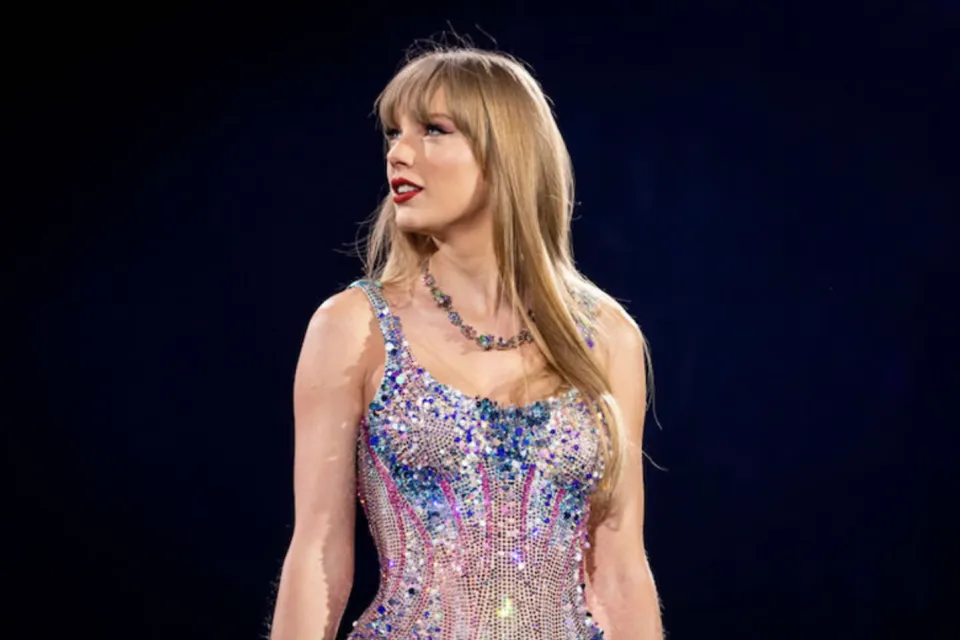
Taylor is a true business prodigy (Photo credit: Taylor Swift's official website)
In his posthumously published book *Rock “n” Roll Economics*, Alan Krueger, former chairman of the White House Council of Economic Advisers and an economist, referred to Taylor as an “economic prodigy” and explained why Taylor is able to earn more than other musicians.
In his view, the explosion of music streaming platforms once left musicians who relied on CD and vinyl sales in a dilemma—traditional channels offered higher royalties, but casual fans weren’t willing to pay; platform royalties were much lower, but they provided greater reach and could generate a steady income. Consequently, most artists have opted to release their work for free on streaming platforms, attempting to build a fan base before encouraging them to purchase CDs and vinyl records.
Taylor, however, would never allow her music to be available for free on streaming platforms; she sells albums first, then offers streaming access, and finally holds concerts.
This model works by first getting die-hard fans to pay, then attracting casual fans, and finally monetizing the fan economy once again through concerts.
In line with the pattern Kruger identified years ago, Taylor’s “Era Tour,” which kicked off this year, was also announced following the release of her album *Midnight*. In 2022, the album sold 945,000 vinyl copies, making it the best-selling physical album since 1991. Taylor now holds seven spots in the top 10 of all-time vinyl sales.
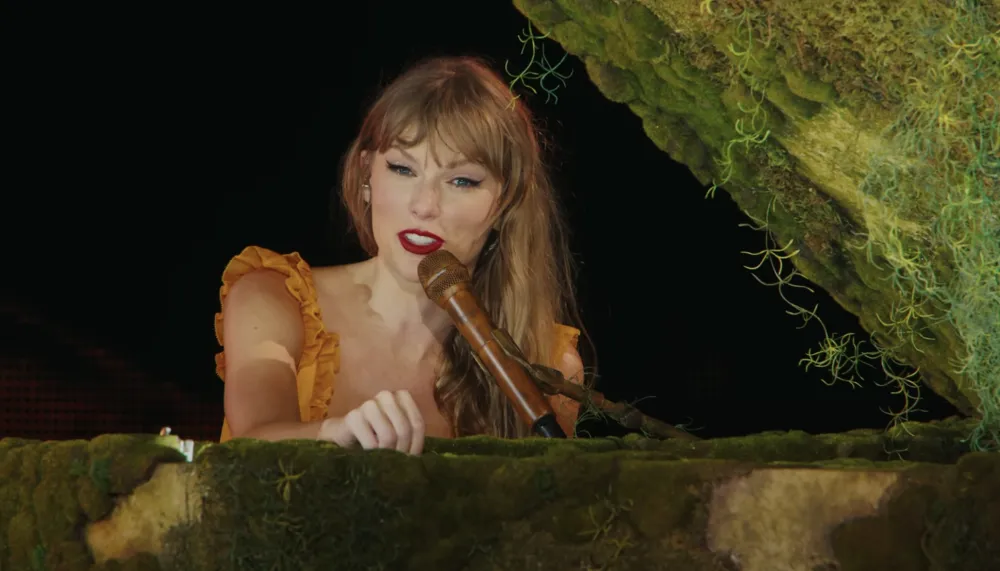
The business model pioneered by Taylor was later emulated by many other singers. (Image source: social media)
From the very beginning, Taylor’s fans have been “conditioned” to pay for everything, and they’re eager to buy anything and everything related to her.
The foundation that keeps this model running is not only Taylor’s commitment to the quality of her music and performances, but also her meticulous management of the fan economy.
A healthy fan community
“The fan ecosystem created by ”Taylor Swift Economics” can perhaps be seen as a prime example of the healthy development of the fan economy.
Launched in 2017, Taylor’s fan community app introduced a fan verification system that allowed fans to earn points by listening to songs, sharing tracks, participating in charity events, and volunteering. These points could then be redeemed for albums, merchandise, and concert tickets. Elite “superfans” also enjoyed priority ticket access and front-row seats.
Although this community app was taken offline in 2019, Taylor’s attitude toward her loyal fans has remained unchanged. She selects gifts for them, writes them handwritten letters, and even gives them front-row concert tickets directly, interacting with them face-to-face.
The "Era Tour" was originally scheduled to include 27 shows in the United States, but due to popular demand from fans, it was expanded to 52 shows. Throughout the tour, there were no instances of lip-syncing, and the performances maintained a consistently high standard.
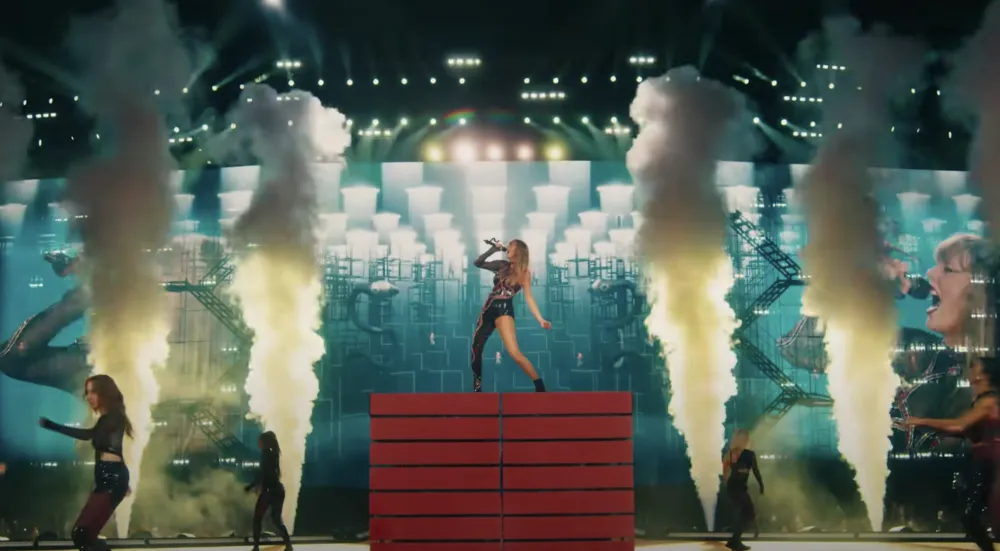
A scene from the "The Era Tour" (Photo courtesy of Taylor Swift's official website)
In late July of this year, Swift also distributed $55 million (approximately 395 million yuan) in bonuses to her team. Everyone received a share, from backup dancers and sound technicians to truck drivers.
Taylor's fans spontaneously shared the news on social media, creating an extremely successful marketing campaign.
In addition, Taylor has cracked down on ticket scalpers with a new ticketing model, greatly ensuring that fans have the opportunity to attend the concerts.
During Taylor’s fourth world tour, traditional ticket sales methods resulted in 30% tickets falling into the hands of scalpers. By the fifth leg of the global tour, Taylor implemented a “slow ticketing model” similar to airline ticket sales, extending the ticketing cycle and slowing down the sales pace, resulting in only 3% tickets ending up in the hands of scalpers.
Under the new system, tickets sold close to the event date are more expensive than early-bird tickets, and tickets are still being released the night before the concert. This not only curbs scalping but also allows Taylor to pocket the premium profits that scalpers would have otherwise earned.
As of November 28 of this year, Taylor had a total of 66 tour dates, and due to market forces driven by high demand and limited supply, Taylor’s fans ended up paying an average ticket price of over $1,300.
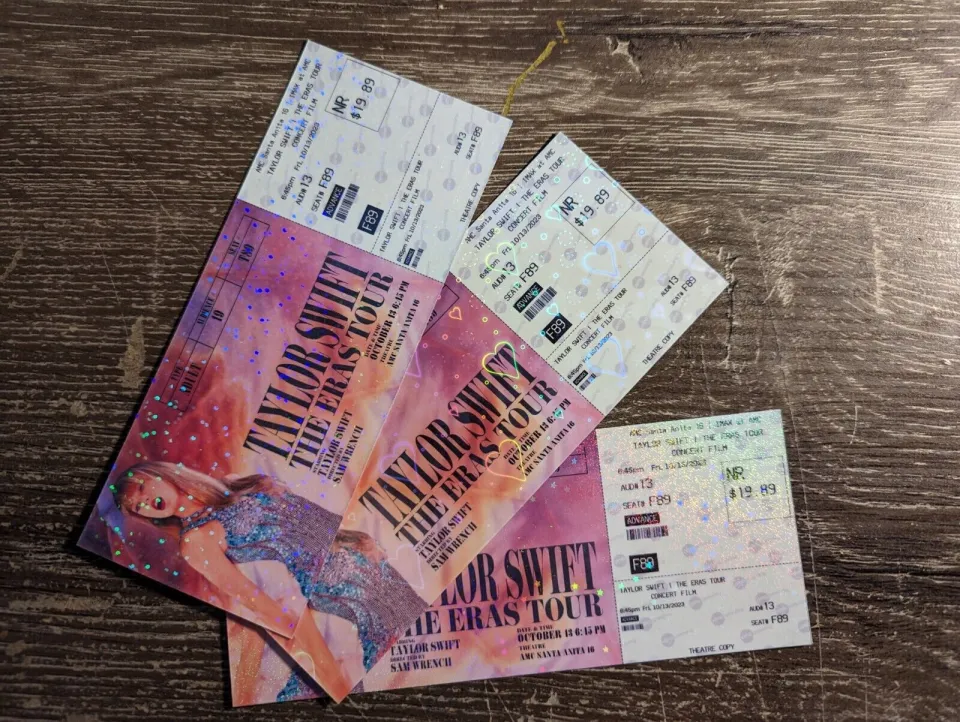
Tickets for the "Era" Tour (Image source: social media)
However, fans who couldn’t get tickets didn’t blame Taylor, because she had arranged an affordable way for all fans to experience the tour—Taylor produced a concert film titled *The Era Tour*, based on her three concerts in Los Angeles this past August.
Based on Taylor’s birth year and lucky number, she set the adult ticket price at $19.89 (approximately 143 yuan) and the admission fee for children and seniors at $13.13 (approximately 94 yuan).
As it turned out, this was yet another successful decision.
Since its release on October 13, *The Era Tour* has grossed over $250 million worldwide on a production budget of less than $20 million, making it the highest-grossing concert film of all time. Produced by Taylor’s own independent film company, this spin-off film bypassed major Hollywood studios and streaming giants, allowing for extremely low production costs—a move that caused quite a stir in Hollywood.
It is worth noting that if Taylor were signed to a record label or had to answer to shareholders, the success stories mentioned above might have been difficult to achieve. The fact that Taylor herself is the owner of “Taylor Swift Galaxy” is a key factor in her ability to make these decisions.
The Booming Concert Economy
Goldman Sachs analyst Lisa Yang said, “In times of crisis, concerts are seen as an affordable luxury.”
This explanation is consistent with the well-known “lipstick effect,” a phenomenon in which people continue to purchase relatively inexpensive luxury items to satisfy emotional needs even during economic downturns. During the Great Depression in the United States, while incomes generally declined, sales of women’s lipstick actually rose.
However, the success of “Taylor Swift Economics” in the United States differs from that of the “lipstick economy.”
Americans generally hold a pessimistic view of the economy, but the economy is already on track for a “soft landing.” Inflation has been brought under control, and with rising stock prices and home values, most households have even seen their incomes increase. It’s not that many people lack the money to spend; rather, they have simply developed cautious spending habits during the recent crisis.
This may be the real reason why millions of Taylor Swift fans are willing to spend $1,300 to see a concert.
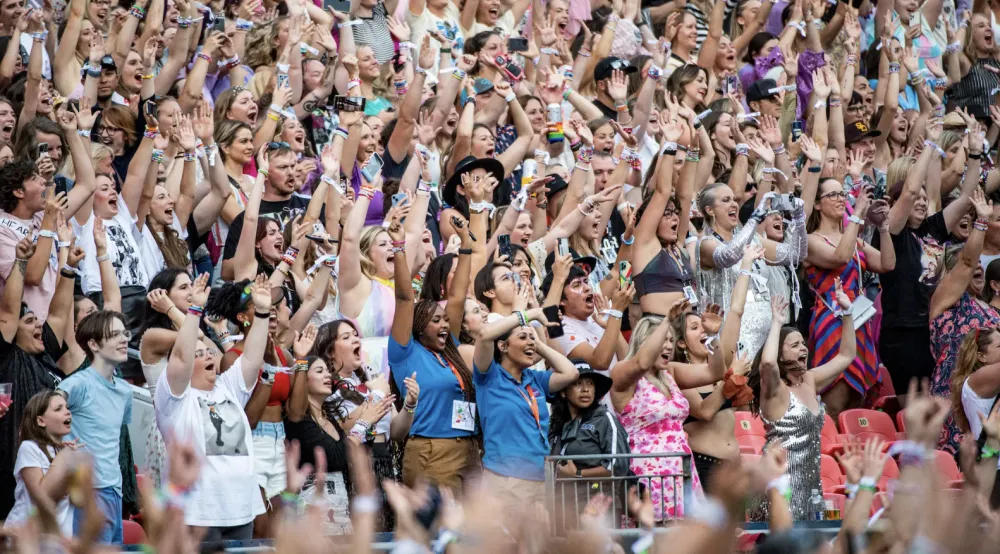
Taylor Swift fans at the concert (Photo source: social media)
In October of this year, the Federal Reserve reported in its triennial Survey of Consumer Finances that, between 2019 and 2022, the median net worth of a typical U.S. household, adjusted for inflation, jumped to $193,000 (approximately 1.385 million yuan), representing a 371% increase—the largest such increase since records began in 1989.
At the same time, with the exception of the approximately 201,000 lowest-income households, most American households are better off than they were in 2019.
Mark Zandi, chief economist at Moody’s Analytics, noted that this is largely due to the Federal Reserve cutting interest rates to record lows at the onset of the pandemic, which reduced borrowing costs for consumers and made people less likely to take on debt. As the U.S. economy began to show signs of a rapid recovery, asset prices—such as stocks and homes—began to rise.
After being pent up for three years, people's appetite for entertainment finally found an outlet this year.
An analysis of bank accounts by the J.P. Morgan Institute shows that the median balance of U.S. personal accounts is at its lowest level in three years, down 41% from its peak in April 2021.
People have finally stopped saving and are daring to spend.
Concerts happen to be the perfect starting point; they are a multifaceted experience that satisfies both emotional and social needs, appealing to people of all ages.
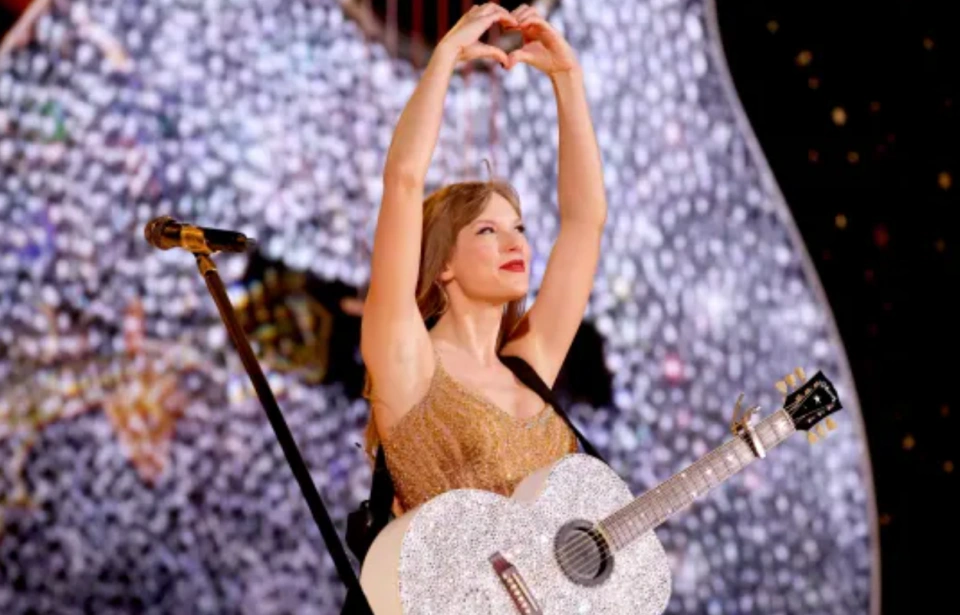
Taylor at the concert (Photo: Taylor Swift's official website)
According to a survey of 2,204 U.S. adults conducted by the consulting firm Morning Consult, 53% of Americans are Taylor Swift fans. Aside from the fact that three-quarters of her fans are white, Taylor Swift’s fan base is fairly evenly distributed across gender, urban and rural areas, income levels, and political views.
However, analysts at Bloomberg believe that this year’s surge in U.S. consumer spending may be a short-lived rebound in demand and is unlikely to remain at high levels.
The long-term trend, however, is the rise of the experience economy, which is evident in more than just the massive popularity of concerts.
International travel rebounded rapidly in 2023, Disney theme parks posted record-high revenue, and *Barbie* and *Oppenheimer* broke box office records at the cinema.

The poster for Nolan's film *Oppenheimer* (Image source: IMDb)
A June report by market research firm Experian noted that Millennials (born between 1981 and 1996) and Gen Z (born between 1995 and 2009) are the driving forces behind the experience economy.
Millennials (59%) and Gen Z (63%) say they would rather spend their money on “life experiences”—ranging from concerts to travel—than invest in their retirement.



 English
  简体中文
简体中文  香港中文
香港中文  日本語
日本語  Español
  Português
  Français