
Xiben Tang Xiao: Insole Giant, Creating Brand Legends
2024-03-23
Shinichi Uchida: The Japanese Economy and Monetary Policy
2024-03-30Professor Qi Bangyuan is one of the most respected figures in Taiwan's literary and educational circles, and is often referred to as "Mr. Qi" by her disciples. Mr. Bangyuan's autobiography, "Julius River," has been both well received and well received. In this 250,000-word biography, Mr. Qi looks back on the ups and downs of most of her life.
Through his personal encounters, Mr. Qi touches upon the vicissitudes of modern China; the upheaval of intellectuals and their constant sense of worry; and the frustration and courage of women who devote themselves to academia. More importantly, as a sower of literature, Mr. Qi constantly asks: in a history so full of shortcomings, why is literature the necessary persistence?
The Giant River is a melancholy book. Melancholy is not so much a personal feeling of Mr. Qi as a projection of her general mood and that of her generation. In terms of her family's education and accomplishments, Mr. Qi can be considered fortunate. Yet beneath the surface, she writes about the pursuits and regrets, the hopes and disappointments of her generation.
Mr. Qi was born in Tieling, Liaoning Province, left his hometown at the age of six, and spent the next seventeen years moving from place to place. In 1947, by chance, Mr. Qi went to Taiwan to work as an assistant professor in the Department of Foreign Languages at National Taiwan University, and unexpectedly settled there for more than sixty years. From the Northeast to Taiwan, from six years to sixty years, these two places, one of which is the place of origin that haunts her, and the other where she has settled down, are both her hometowns.
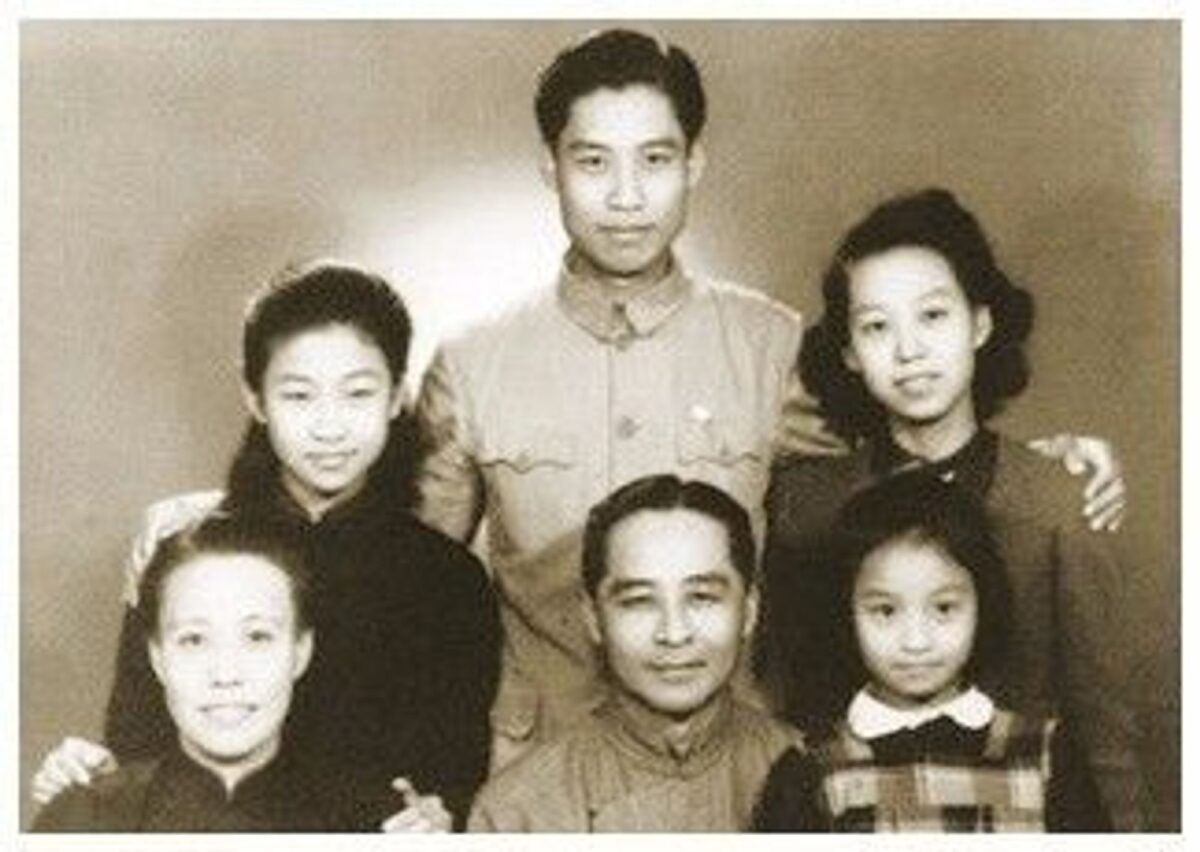
Qi Bangyuan (back row, first from right) family photo
Northeast China and Taiwan are far away from each other, with very different size and geography, but they have experienced similar destinies in the history of modern China, and even formed a relationship of mutual reflection. The Northeast was originally the land of the Manchu Qing Dynasty and was sparsely populated, and it was not until the 1870s that it was opened up to Han Chinese settlement. In Taiwan, which was isolated overseas, it was not until the nineteenth century that a large number of immigrants from southern Fujian settled there. Both of these places became targets of covetousness by the imperialist powers of the East and the West at the turn of the twentieth century.
In 1895, after the Sino-Japanese War, China and Japan signed the Treaty of Shimonoseki, in which both Taiwan and the Liaodong Peninsula were ceded to Japan. Afterwards, the belonging of Liaodong Peninsula caused the intervention of Imperial Russia, France and Germany, and it was only after several rounds of mediation that China exchanged the "redemption fee for Liaodong Peninsula" for the return of Liaodong Peninsula. Once the powers intervened, the two regions were in a state of turmoil. In the next fifty years, Taiwan became a Japanese colony, while the Northeast went through the Russo-Japanese War (1905), the "September 18th Incident" (1931), and finally the establishment of the "pseudo-Manchukuo" (1932-1945), directed by Japan.
Both places are home to immigrants, and their recklessness has always alienated the centralizers. Both places have also been colonized in different forms, and have always harbored a sense of sadness and injustice.
Juru River does not dwell much on the history of the Northeast and Taiwan, but readers who fail to appreciate the author's complex feelings about these two places will find it difficult to understand what is going on between the lines. The important thread that connects the history and politics of the Northeast and Taiwan in the book is Mr. Bangyuan's father, Mr. Qi Shiying (1899-1987).
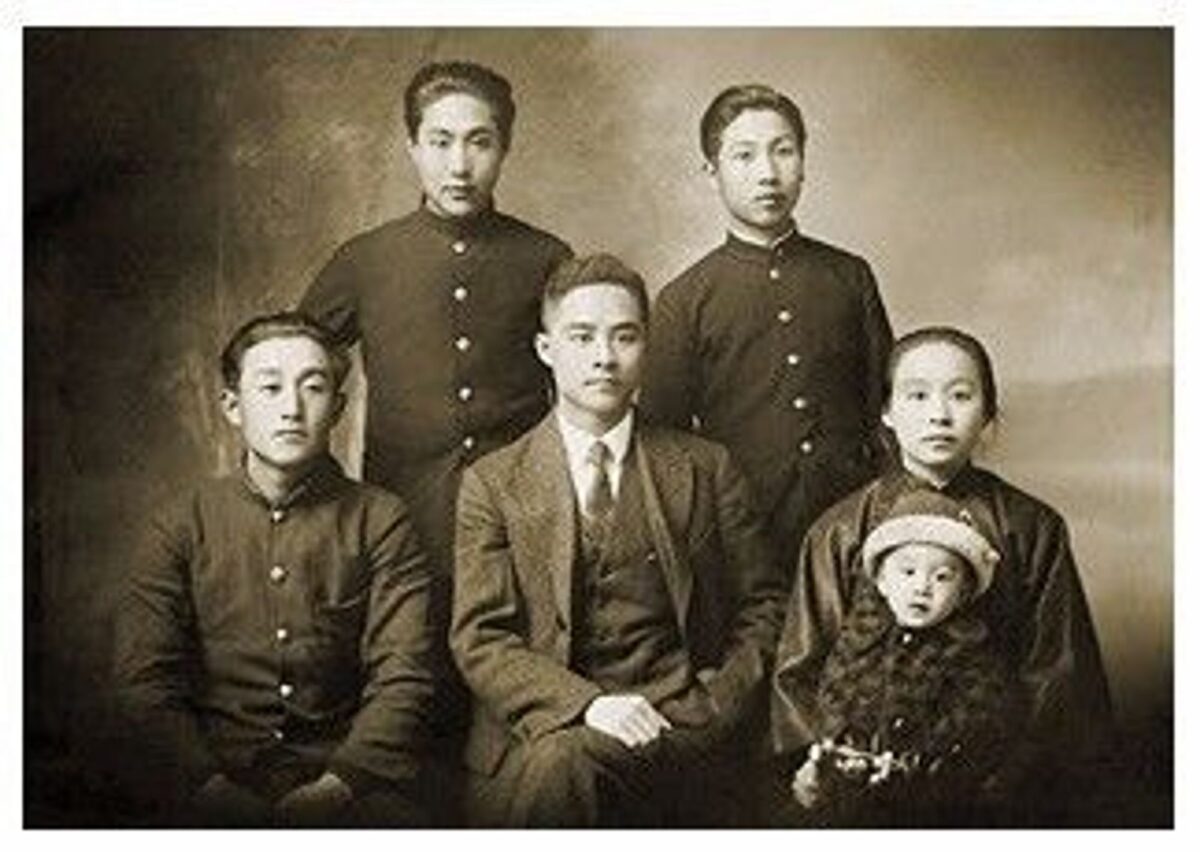
Qi Shiying (front row, center) and his sister Qi Jinghuan (front right), who organized anti-Japanese resistance in the Northeast China
Qi Shiying was an elite member of the Northeast in the early years of the Civil War. In his early years, he was subsidized by Zhang Zuolin's public funds for studying abroad, and he once went to Japan and Germany successively. In the closed situation of Northeast China at that time, this was a great qualification. However, the young man Qi Shiying had other ambitions, in 1925 he returned to Shenyang from Germany, and met Guo Songling (1883-1925), the leader of the New Army, who was a general of Zhang Zuolin. Guo was angry at the Japanese and Russian invasion of the Northeast while the warlords were still engaged in civil war, and urged them to turn against Zhang, which Qi Shiying joined as a scholar. However, Guo Songling did not have the right time, place and people, and was defeated and martyred in Juliuhe before long. Since then, Qi Shi-ying has been in exile.
The "uncrossable Julius River" has become the most important imagery in Julius River, which looks back on the history of the troubled Northeast and China. But history is not hypothetical, nor can it be rewritten, and Qi Shiyin's challenges have only just begun. He joined the Kuomintang (KMT) and took charge of party affairs in the Northeast, while at the same time founding the Zhongshan Middle School, which housed exiled students from the Northeast.
At the end of the war, Qi Shi-ying is ordered to consolidate the personnel in the northeast and rebuild his hometown, only to find that the KMT's receiving officers are corrupt and incompetent. With the rise of the Chinese Communist Party and the KMT's defeat from here, Qi Shi-ying goes into exile again.
In his later years, Qi Shi-ying published an oral history of his half-life of disagreements with the KMT Central Committee, but the language is more subtle. The difference in Juliuhe is that it is a daughter's remembrance of her father, so the perspective is naturally different.
More notably, Juruhe recounts Qi Shiyin's experiences after his arrival in Taiwan, where he was expelled from the party in 1954 for opposing the policy of increasing electricity bills to raise military pay, and almost imprisoned in 1960 for organizing a new party.
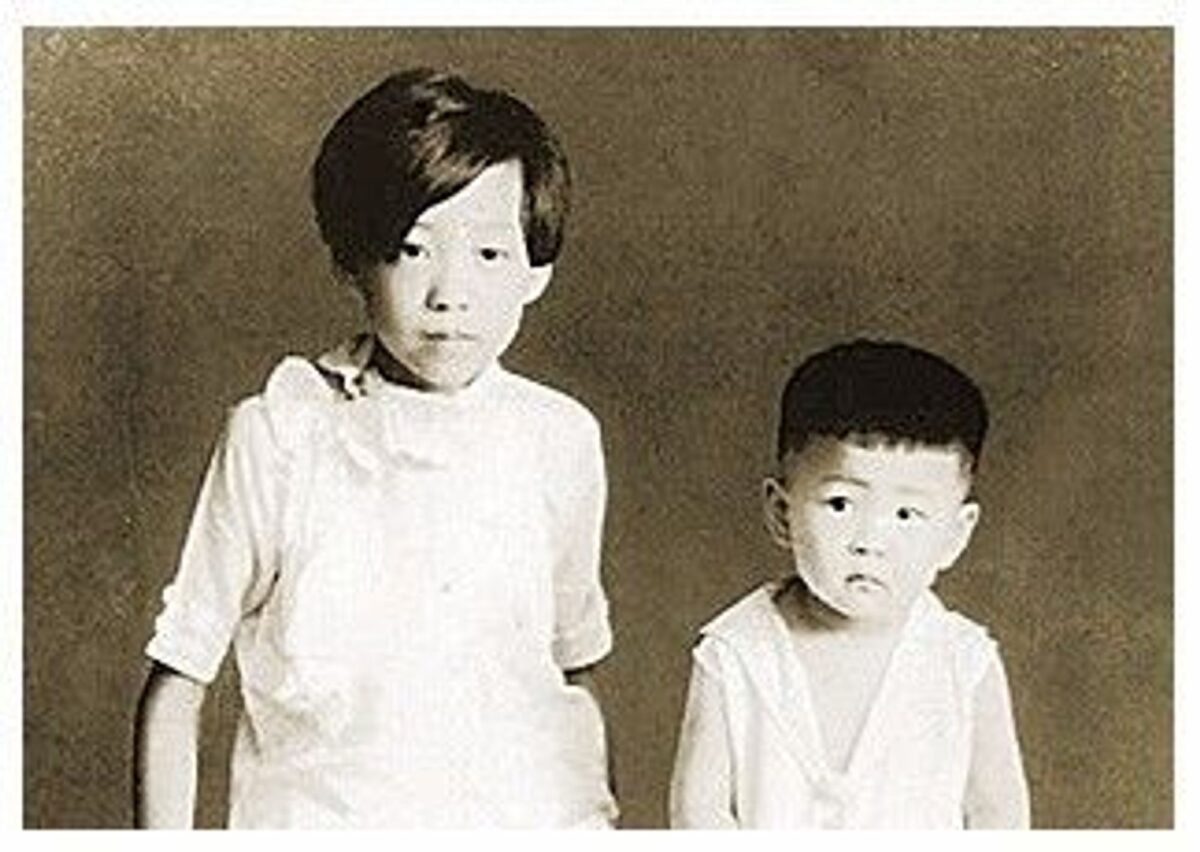
"Mom, what's my last name today?" --Qi Bangyuan (left), exiled with her family to the rented world after September 18, changing her name frequently on a daily basis.
Qi paid the price for the livelihood and democracy of Taiwan for the rest of his life, but at heart his anti-Chiang was also motivated by the regret of the people of Northeast China. Both the Northeast and Taiwan were nothing more than pawns of the Chiang regime.
The Juru River, which cannot be crossed - how many grandiose feelings have been put to waste. In his later years, Qi Shi-ying died in a state of depression, filled with loneliness and anger. But as Mr. Tang Junyi said in his discussion of the Chinese humanistic spirit, from "shocking the heavens and moving the earth" to "silent the heavens and lonely the earth", what regret is there in seeking benevolence and obtaining benevolence? This northeastern "man" and Taiwan's karma is to be carried on by his daughter.
Qi Bangyuan was one of the earliest mainland intellectuals to come to Taiwan after the restoration of Taiwan. At that time, Taiwan was still affected by the defeat of Japan, the February 28th Incident had not long passed, and the civil war between China and the Communist Party was in full swing, full of uncertainties. Under these circumstances, a young northeastern woman began another page of her life in Taiwan. She was one of the first scholars to emphasize Taiwanese literature, and was also a driving force in the translation and introduction of Taiwanese literature.
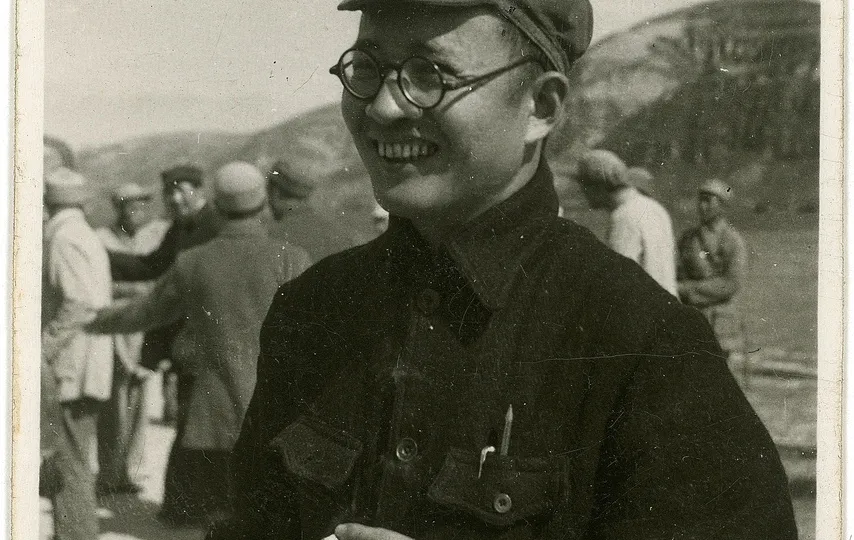
The battle of Juliu River has long since vanished into thin air, and the glittering young man in the photo has rested in peace after all the hardships he endured. His six-year-old daughter, who had been uprooted from her hometown, became, by chance, what Bai Xianyong called "the angel who guards Taiwan's literature".
Looking back, Mr. Bangyuan laments that while embracing Taiwan, "how could she have ever written a blood-and-tears account of the hometown where she was born and the people who fought for her"? Juru River is therefore a belated book. It is a dialogue between a daughter and her father across the great stream of life, and a confession by Mr. Bangyuan for the Northeast, which he cannot return to, and for Taiwan, which he will never leave again.
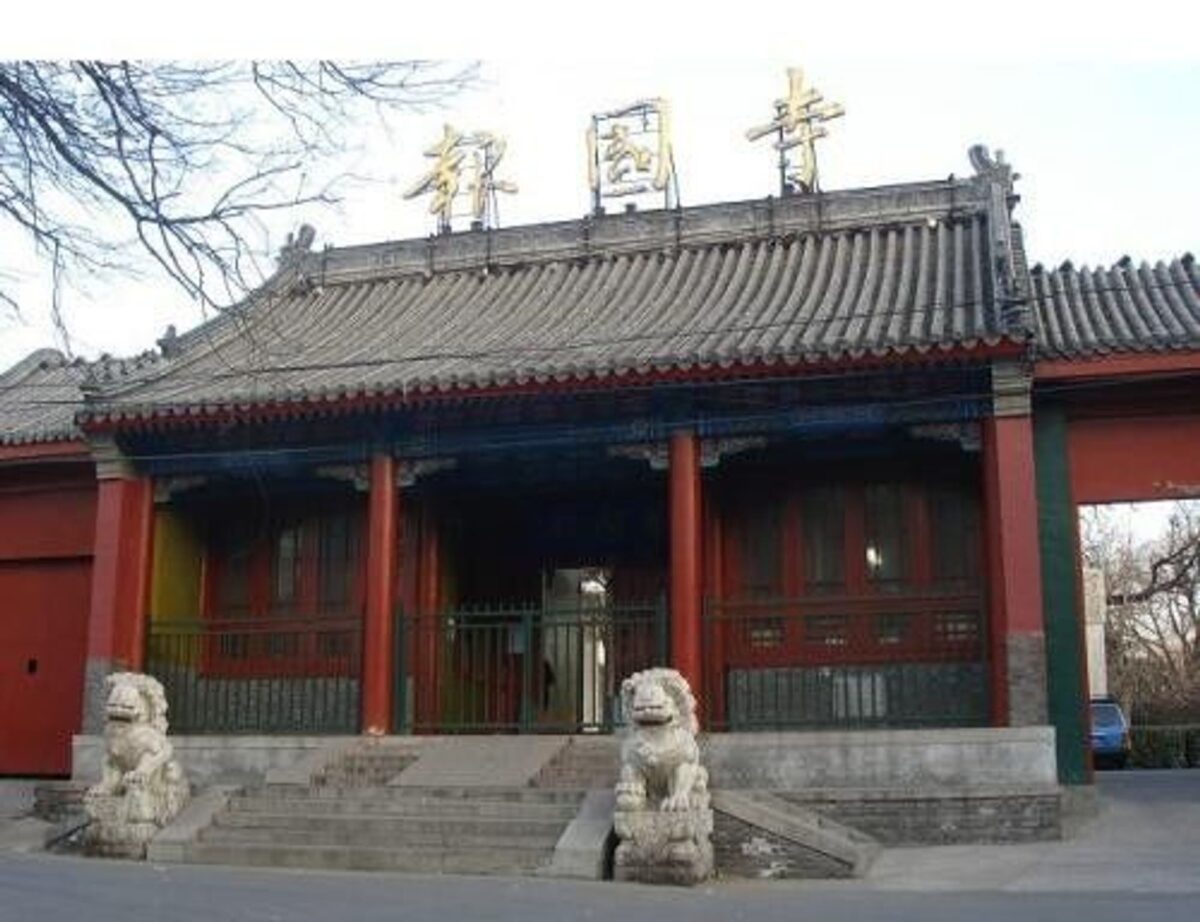
The former site of the National Sun Yat-sen High School founded by Qi Shi-ying at the Temple of Repose in Beijing.
Among the many characters mentioned in Julius River, I think there are four who are most important in determining Mr. Bangyuan's attitude: Qi Shiyin, Zhang Dafei, Zhu Guangqian, and Qian Mu. As mentioned above, Mr. Qi Shiyin's life is the "subtext" of this book.
Politically Qi was an uncompromising figure on the stage from the battle of Juruhe to the withdrawal of the Kuomintang from the mainland, but after coming to Taiwan he ended his career prematurely because of the offense he met with the leader. Qi Bangyuan sees her father as a proud man who was never able to make it to the center of power. But she believes that her father's specialty was not his stubbornness in choosing what was good for him; more importantly, he was a "gentle and clean" man of character.
Because of this, after the Nanjing Massacre Qi Shiying reunited with his family in Wuhan, his "white handkerchief was covered with gray and yellow dust ...... wet with tears. He said, 'We really are a broken country.'" The night after the Chongqing bombing the rain poured down, "Mom was sick again ...... the whole family crowded in the house with half a roof ...... he sat at the head of the bed, a large umbrella in one hand to cover his and his mother's head, and so he waited for the daybreak "...... In his later years, Qi Shiying was depressed, every mention of the beginning and end of the fall of the Northeast, that is, tears can not help themselves. This is the tears of loss and guilt, but also the tears of cleanliness and self-love.
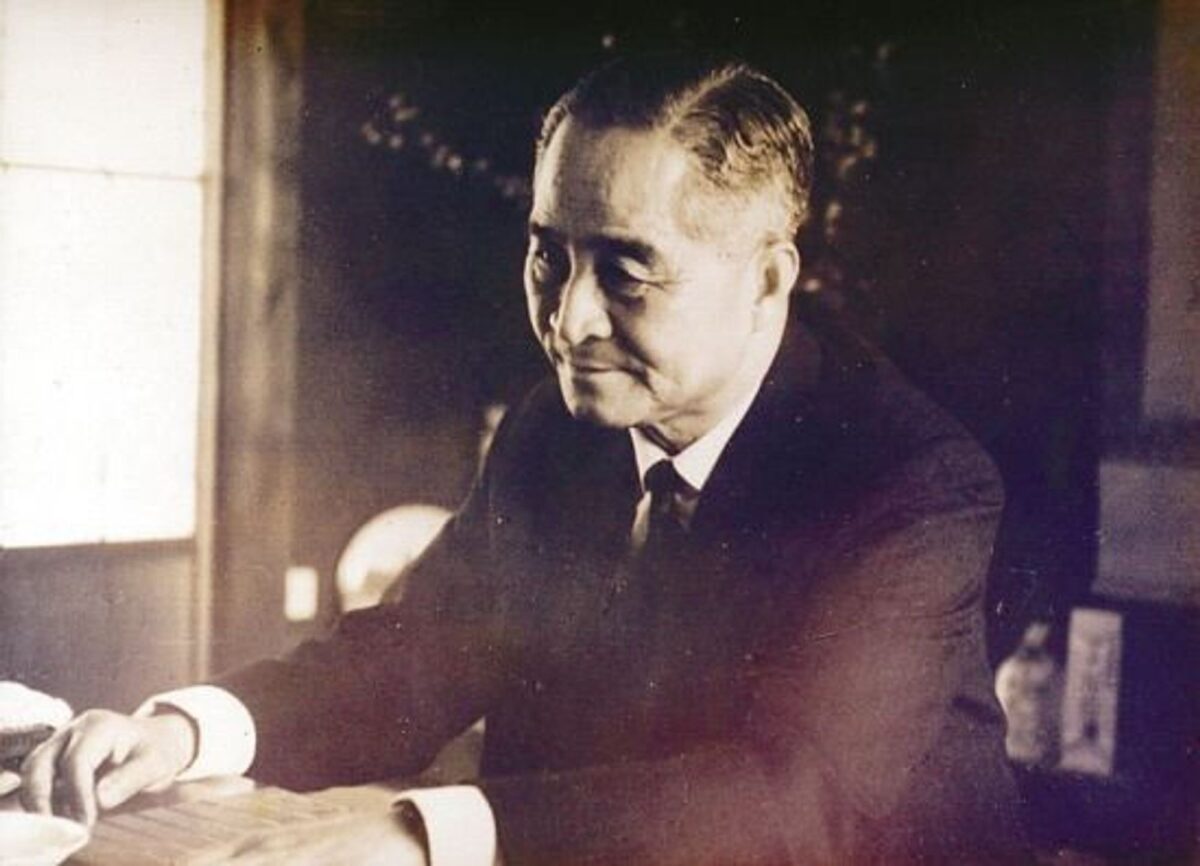
Qi Shi-ying in his later years (1956, courtesy of Qi Bangyuan)
While Qi Shi-ying's life had many ups and downs, Qi Bangyuan said that she learned "gentleness" and "purity" from her father, which is very intriguing. Heroes come out of troubled times, but how many people can retain "gentleness" and "purity" throughout their lives, apart from success and failure? This is the tone of "Juru River", which reflects on history and life.
With such criteria in mind, Qi Bangyuan wrote about her relationship with Zhang Dafei (1918-1945). Zhang Dafei was a child of the Northeast. His father was the head of the Shenyang County Police Department during the establishment of the "Pseudo-Manchukuo" and was publicly burned to death by the Japanese after pouring paint on his house because he had helped the anti-Japanese forces.
Zhang Dafei fled to Guanzhou and met the Qi family when he entered Zhongshan Middle School; he joined the air force after the July 7th Incident and was martyred on the eve of victory in an air battle in Henan Province. Zhang Dafei's story is a tragic and heroic one, and his care for the young Qi Bangyuan became the most profound understanding between the two men. When he fatalistically met his death, he left behind eternal regrets for the living.
Qi Bangyuan's Zhang Dafei is valiant, dear and sincere, and should be the most memorable character in the book. His figure standing in Qibangyuan's campus in the rain, his devout religious beliefs, and his quiet farewell letter are all full of the romantic colors of youth and death.
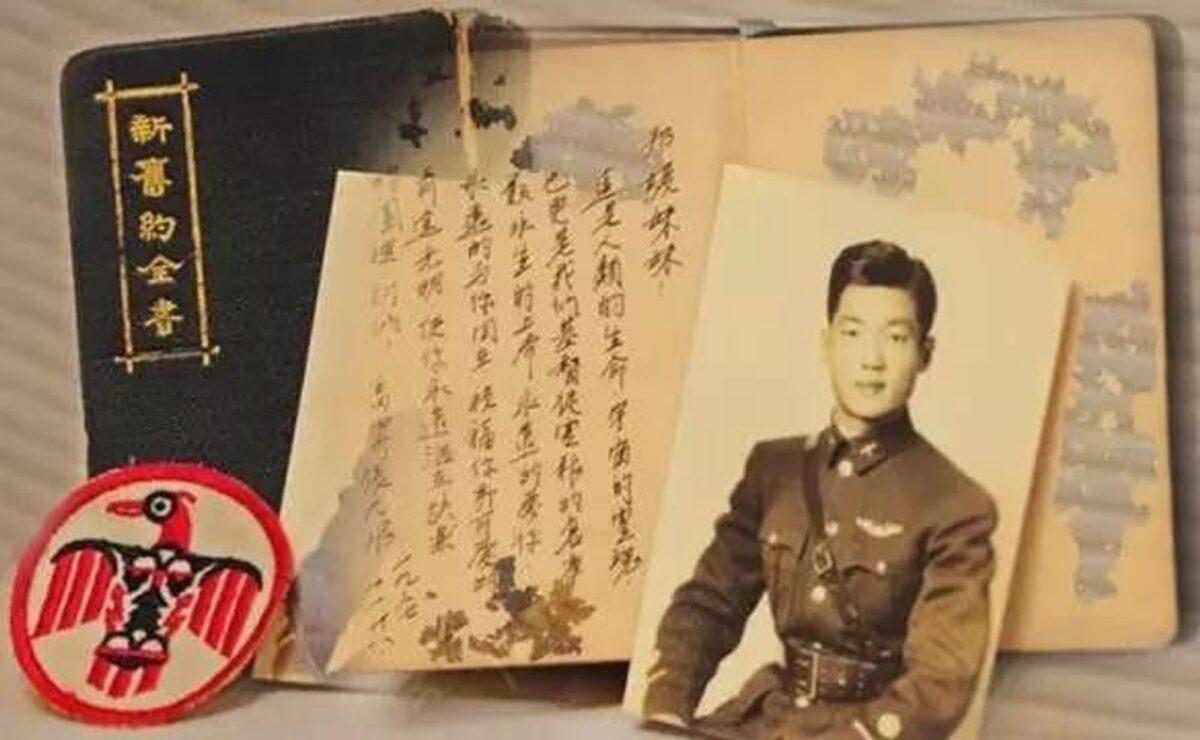
Martyr Zhang Dafei's relics
But that is what Mr. Bangwon is trying to clarify: their relationship cannot be so easily categorized, for it was one of the most sincere trust, the cleanest of sentiments. Our anti-war imagination today has long been monopolized by stories like "Lust, Caution". When scholars and literati froth at the mouth to analyze and analyze the complexity of the Eileen Chang-style love affair, Zhang Dafei such a life, such a death, on the contrary, to make people speechless. In the face of the deceased, is this not a more difficult memorial?
At the end of the last century, seventy-five-year-old Mr. Bangyuan visited the Memorial of Fallen Soldiers in Nanjing and found Zhang Dafei's name among the thousands of victims. Fifty-five years of mystery unraveled, dust to dust, earth to earth, history's revelation here is not about heroes, much less men and women.
As Mr. Bangyuan said, Zhang Dafei's life was as short as a short-lived flower, "blooming in the darkest night, closing quickly and falling to the ground", that's all, but it was "so unspeakably noble" and "so brilliant and clean". It was so, but "so unspeakably noble" and "so brilliant and clean".
Mr. Zhu Guangqian (1897-1986), the most renowned modern Chinese aesthetician, taught at Wuhan University in Leshan during the war and personally urged Qi Bangyuan to transfer from the Philosophy Department to the Department of Foreign Languages and Literature because he appreciated her talent.
Zhu Guangqian is generally known for his Twelve Letters to the Youth or The Psychology of Tragedy, but in fact Zhu was also a key figure in the "Beijing School" of literature in the 1930s, and together with Shen Congwen and others, he set out to create a respectful and sincere view of writing. But this was the origin of Zhu's later controversy in the academy, when Lu Xun wrote an article in 1935 attacking Zhu's view of literary "quietness", which was a cause of great controversy.
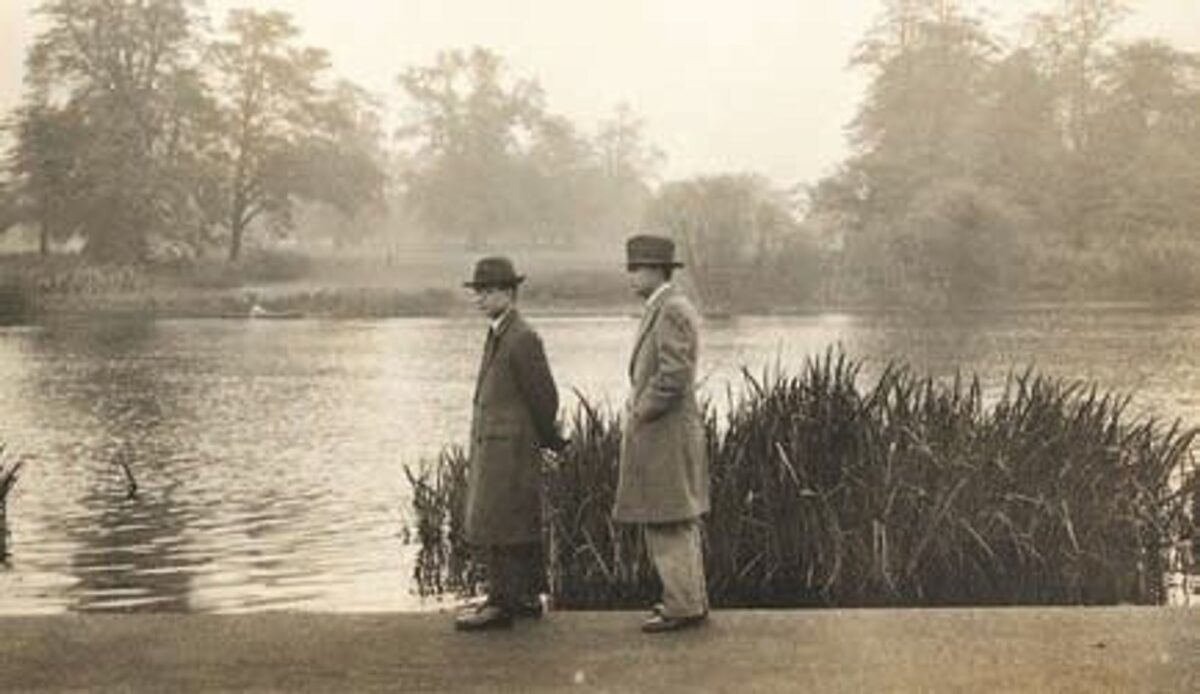
Zhu Guangqian during his time at the University of Edinburgh, England
Qi Bangyuan's description of Zhu Guangqian's anti-war teaching reveals a lesser-mentioned side of Zhu. By teaching the poetry of Shelley and Keats in the midst of the war, Chu was not so much out of touch with the times as opening up another realm of response to reality - "words that are not as good as one's own, if they are not worrisome," as the saying goes.
One day when Zhu was lecturing on Wordsworth's long poems, he suddenly choked with emotion and could not stop his tears; he "walked out of the classroom quickly, leaving the room in dismay". What is remarkable about this is not Zhu Guangqian's tears, but his quick walk out of the classroom. This is a kind of reserved attitude. Zhu's aesthetics in fact, there are worries as the background color, he talked about "quiet" where is no feeling in reality? That is precisely the openness and self-respect after the pain, the spirit of Chinese "tragedy".
The friendship between Mr. Qian Mu (1895-1990) and Qi Bangyuan is another climax of Juruhe. When they first met, Qi was working at the National Compilation and Translation Center, and Qian was already living in Taipei, Taiwan, at the Sushulou Building, and they were involved in a dispute over whether a new edition of the General History of China was blasphemous against the Martial Sage Yue Fei; the master of Chinese culture was even accused of endorsing a scholarly work that "shook the foundation of the country". This is another example of extreme politicization of history in extreme times. But Qian Mu was not moved. No matter how many storms and waves he has gone through, his only belief in the inheritance of culture is "sincerity and clarity".
At this time, Qian Mu had gradually lost his eyesight, but his mind became clearer and clearer. For eighteen years, Qi Bangyuan regularly visited Mr. Qian Mu to talk about life and the way of survival of the literati in the chaotic world. In the late autumn in Taiwan, all was gloomy, but only the red leaves in front of the steps of Mr. Qian Mu's residence were still so peaceful and splendid. Then in 1990, under the clamor of "legislator" Chen Shui-bian and the watchful eye of "President" Lee Teng-hui, Mr. Chien was forced to move out of the Sushu Building, and died two months later.

Mr. and Mrs. Qian Mu
Qian Mu's Outline of National History begins with the statement that "those who know a little about the history of their own country must, in particular, be accompanied by a kind of warmth and respect for the past history of their own country". It is in the personal record, out of the warmth and respect for the typical past, that the meaning of history emerges. "There are still people and things in the world that cannot be forgotten," and so it was in the past, and so it should be in the future. This is what Mr. Bangyuan learned most from Mr. Qian.
From the 1930s to the 1990s, Qi Bangyuan spent a decade in school, studying and teaching, witnessing the complex interactions between knowledge and factors other than knowledge. She described her life as if she had been "climbing up a stone ladder stacked with books, word by word," but in the end she realized that the ladder was in fact a stone ladder. But in the end, she realized that the ladder was actually a stairway to heaven, and that it was "removed at the initial stage of her ascent". The premature removal of this ladder of knowledge is not only related to more than half a century of historical upheaval, but also highlights the limitations of gender identity.
"After the September 18th Incident, a large number of young people from the northeast went into exile in Guanzhou. Sensing that they were out of school, Qi Shiying made many efforts to establish the National Sun Yat-sen High School in 1934, and the first batch of students reached 2,000. This was the first time Qi Bangyuan witnessed the close connection between education and the fate of the country. Half of the students in Zhongshan Middle School were homeless, and the school was their only means of support, so teachers and students naturally had a family-like relationship with each other. The saying "Although there are three households in Chu, the death of Qin will be Chu" became the goal of their common encouragement.
At the outbreak of the war, these half-grown children were led by their teachers from Nanjing to Wuhan, through Hunan, Guangxi, and then to Sichuan. The threat of artillery fire was constant along the way, and deaths and injuries occurred at any time, but the students of Zhongshan Middle School were still able to sing, which is a legend in the history of anti-war education.
Zhongshan Middle School was founded because of the war, while Nankai Middle School and Wuhan University, where Qi Bangyuan studied, were relocated because of the war. Founded in 1904 by Mr. Zhang Bo Ling, Nankai is a pioneer of modern education in China, with alumni such as Premiers Zhou Enlai and Wen Jiabao, Presidents of the Academia Sinica Qian Siliang and Wu Dayou, and countless cultural celebrities such as Cao Yu, Mu Dan, and Duanmu Hongliang. Wuhan University is a major academic center in Central China, formerly known as the Self-Strengthening College founded by Zhang Zhidong, which became one of the first national universities in China in 1928. At the outbreak of the war, Nankai moved to Shapingba in Chongqing and Wuhan University moved to Leshan.
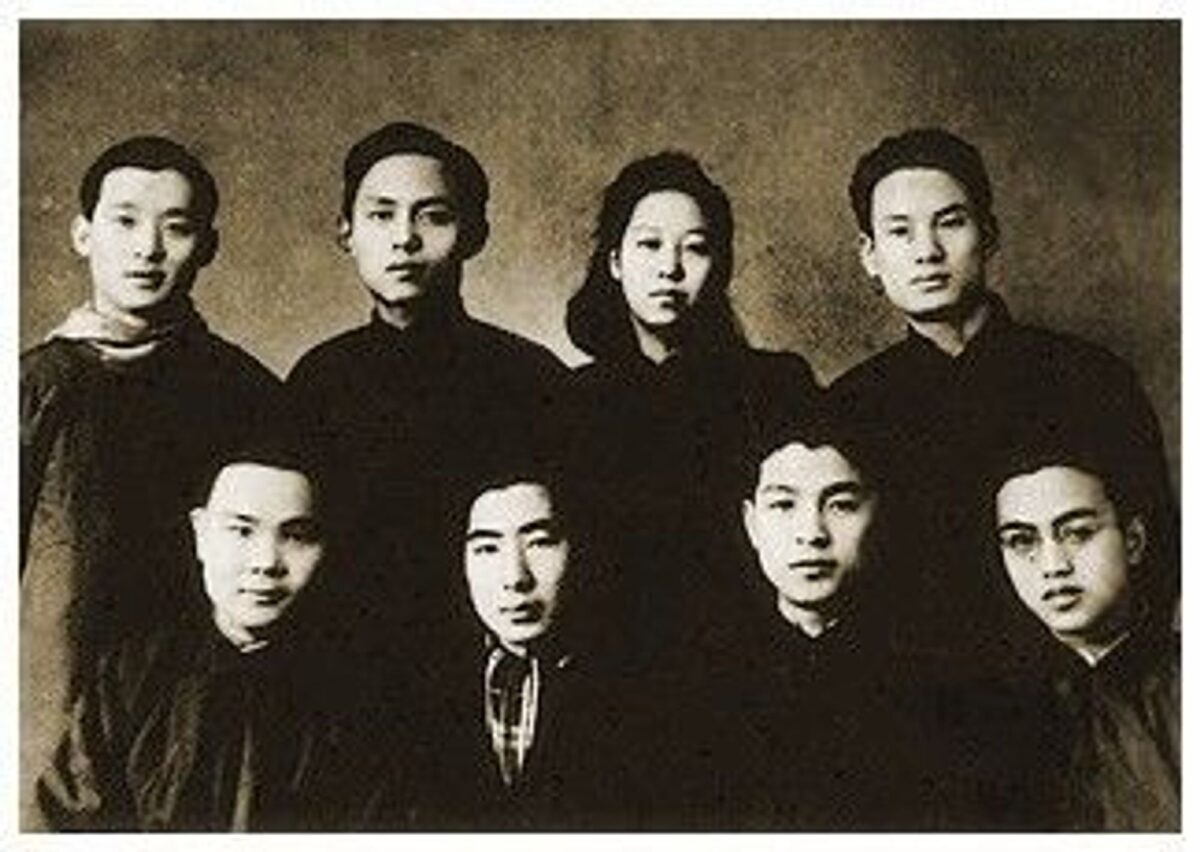
Qi Bangyuan (second from right) and other Nankai alumni sent Wang Shirui (second from left) to join the "100,000 Young Men 100,000 Army"-a campaign to promote the development of Nankai.The Guru RiverP116
Mr. Bangwon was fortunate enough to be able to receive his education on a regular basis during the war. Even under the most unfavorable conditions, Nankai maintained a consistent commitment to the quality of education. The six years of Nankai's existence gave Qi Bangyuan a deep sense of self-expectation, as the school's anthem says: "Intelligent, courageous, pure, and refined". When she reached Wuhan University in Leshan, she concentrated on literature under the guidance of famous teachers.
The material life during the war was hard, but the Chinese language classes of Meng Zhisun, the "Passionate Mengfuzi" of Nankai, or the English and American Literature of Zhu Guangqian of Wudan University, the Literature and Life of Wu Mi (1894-1978), or the Shakespeare of Yuan Changying (1894-1973), all gave students a breath of fresh air that they would use for their entire lives. During the years when millions of people were displaced from their homes and the foundation of Chinese culture was scarred, Qi Bangyuan witnessed the importance of knowledge and education through her personal experience.
In the 1970s, when Mr. Qi was working at the National Compilation and Translation Office, he intended to revise the Chinese textbooks for secondary schools, but unexpectedly he drew a mountain of attacks. What Mr. Qi insisted on was the compilation of six textbooks that were not politically oriented, but could arouse reading interest and enhance language knowledge. One can only imagine how Qi had to contend with the opponents, but the most important thing was that she overcame all the difficulties and accomplished her ideal.
When we compare the contents of the old and new textbooks today, we cannot help but be surprised that the shocking controversies of the time have long since become the yellow flowers of tomorrow. In the future, when teachers and students in Taiwan's middle schools use a Chinese textbook that is both literary and approachable, can they ever imagine that the pushers behind the scenes are so enthusiastic, perhaps because of their own Nankai experience: a good teacher and a good textbook can enlighten a sensitive mind even in the most obscure moments.
The bottom line of Mr. Qi's account of her schooling or teaching experience is her self-awareness as a woman, who in the 1930s and 1940s had been educated quite commonly, but who still found it difficult to pursue a career after graduation. After receiving a degree in foreign languages from Wuhan University, Qi Bangyuan was at a loss. She once considered furthering her education, but then she became a wife and a mother, and began a different career.
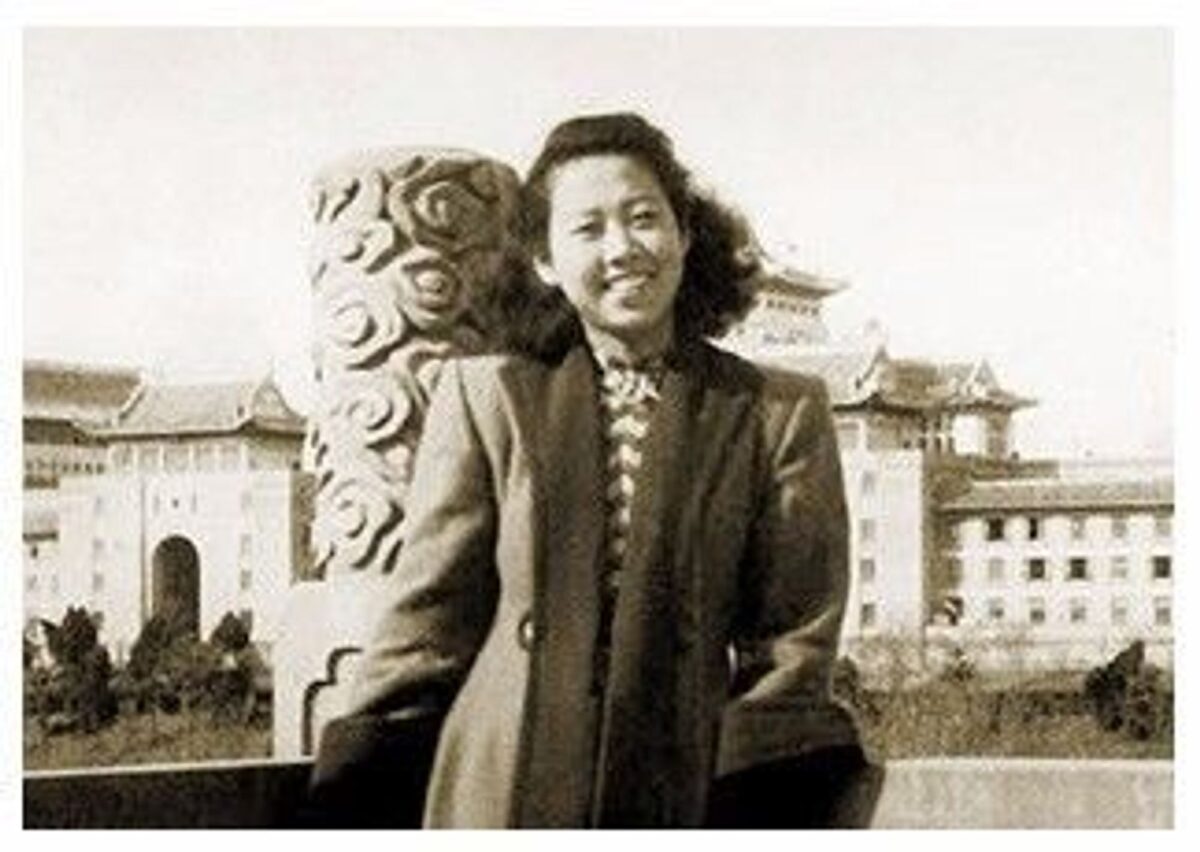
Qi Bangyuan during her time at Wuhan University. --Chapter 3 of "Juru River
But Mr. Qi never gave up her dream of pursuing learning. She recalls how, when she first came to NTU as a teaching assistant in the Department of Foreign Languages and Literatures, she was attracted by the books piled high in her office; or how, when she was teaching at Taichung No. 1 Middle School, she stole a few hours from "the vegetable market, the coal stove, the bottles of milk, and the diapers, to talk about her cherished knowledge" and felt a sense of "happiness". The feeling of "happiness". It was not until twenty years after she graduated from college that she had the opportunity to pick up her books, and by then she was nearly forty-five years old.
In 1968, Qi Bangyuan enrolled in graduate school at Indiana University in the United States, and seized every minute of "stolen" time to study hard, which she considered to be "the most exhausting and fulfilling year" of her life. However, with a master's degree on the line, she had to give it all up for the sake of her family, and her father was among those who persuaded her to do so.
For Mr. Bang-won, this is the "giant river" that she could not cross in her life, right? Mr. Qi is despondent because he knows that he has the ability and the opportunity to cross to the other side of the river, but he cannot reach it.
It is worth thinking that if Mr. Qi Shiyoung's Julius River has epic waves, Mr. Bangwon's Julius River is not like that at all. Her "river" is filled with the rules of a good wife and mother, and the day-to-day responsibilities of the family. But such a "domestic" test of life, so trivial, so long, the difficulty may not be less than a battle, a political dispute. In the temple of knowledge, women of Mr. Qi's generation had too much trouble getting half the work done. It was not until many years later that she was able to face it openly.
Juru River is a review of the torrent of modern Chinese history and the people and events that floated and sank in it, and it is a book that seems to be a tribute to the "losers", to use the recently popularized term. If the reason for honoring them is that they are "losers", it seems to overlook the power of the individual's will to sublimate under the intertwining of fates, and the "light of latent virtue" that emanates from it. It is worthwhile to consider the aphorism of the Bible, 2 Timothy: "I have fought the good fight, I have finished the race, I have kept the faith."
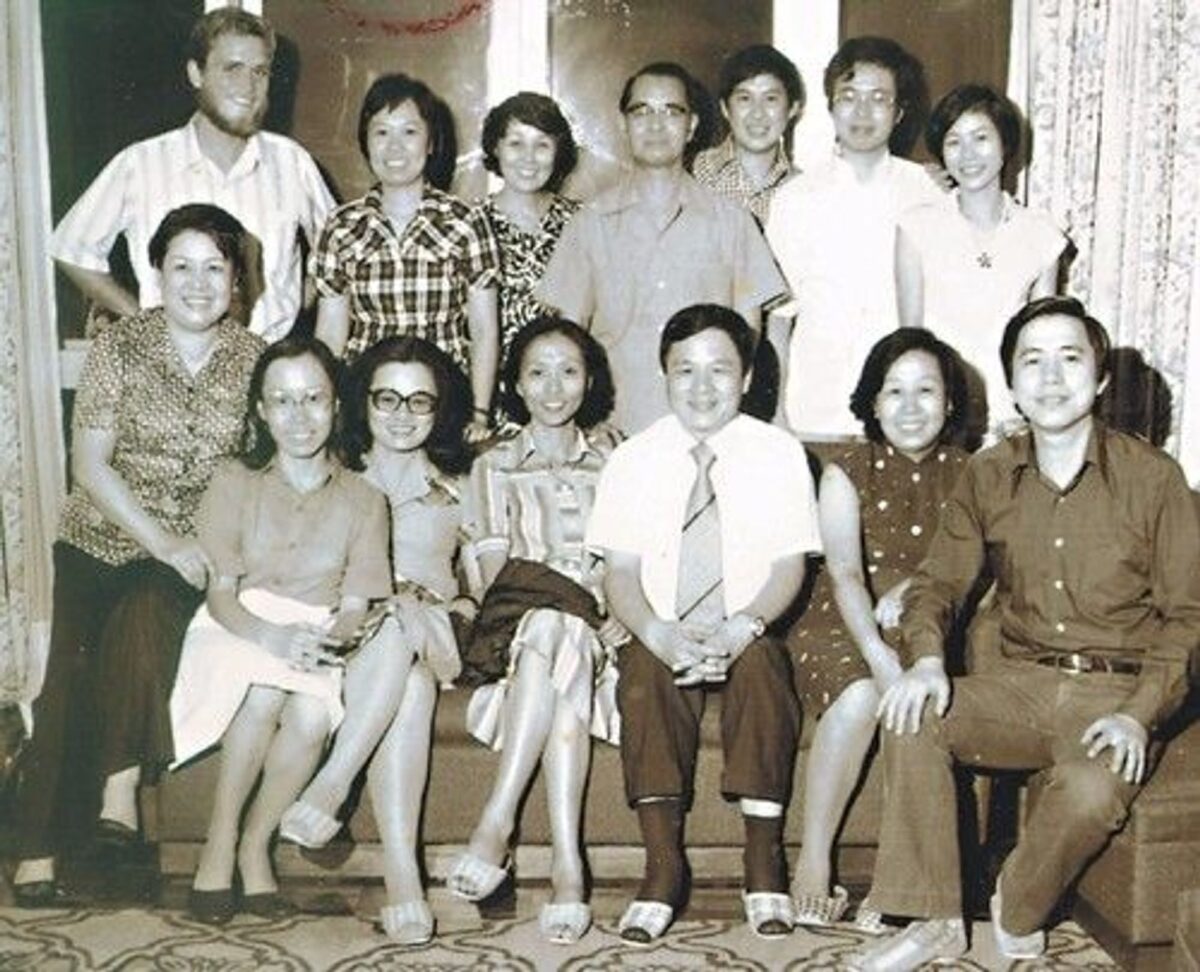
Qi Bangyuan (front, second from right) with Bai Xianyong (back, third from right) and other friends at the party
It's hard to find memoirs that intersect history and literature as intimately and honestly as many of the chapters in The Great River. Qi Bangyuan witnessed the omnipresent power of literature by writing about her own life. Her literary enlightenment began in Nankai; Mr. Meng Zhisun's Chinese poetry class made her "recite and appreciate all the works as if she were drunk, and they still remain clearly in her heart. Professor Zhu Guangqian's English Poetry class at Wuhan University introduced her to the great poetic spirit that has shaken British and American culture since Romanticism. Wordsworth's ethereal "Lucy" poems, Shelley's "Song of the Lark" with its light-hearted and uninhibited imagery, and Keats's "Ode to a Nightingale" with its lyricism about the mysterious transitions of life and death, all made a twenty-year-old Chinese female student unable to stop herself.
Looking at the chaos and death of war, the poem's resonant voice calls on Qi Bangyuan to maintain the order and dignity of life. As a teenager, Shelley's "Lamentations", "I die! I faint! I fail!" resonated with her infinitely. But "what I think about is not only the life and death of a person, but I feel that his life and death are closely related to the world, life, and the time that runs day and night. We are so young, and yet we are caught up in such a vast and seemingly endless war".
At the moment of the tragic news of Zhang Dafei's martyrdom, Whitman's "Ah, Captain! My Captain! precipitates her pain and confusion. "O the bleeding drops of red,/Where on the deck my Capitan lies,/Fallen cold and dead.""That powerful verse, across the Pacific echoes to all the of grief." Grief is thus elevated to compassion.
Years later, Mr. Qi published a collection of Chinese literary criticism, Tears of a Thousand Years. The title of the book is derived from Wang Si-Shi's commentary on Du Fu's "Farewell without a Home" as quoted in Du Poetry Mirror Ambrose: "Witnessing the poem, he shed a thousand years' worth of tears." Life, death, longing, love, and affection are interwoven into the common themes of life, and only poets can "witness" and inscribe these experiences into a voice that reverberates through the centuries with their pure hearts and eyes. Mr. Qi's tears not only echo the tears of Du Fu a thousand years ago, but also understand from Du Fu the tears of her teacher Meng Zhisun and Zhu Guangqian, as well as the tears of her father.
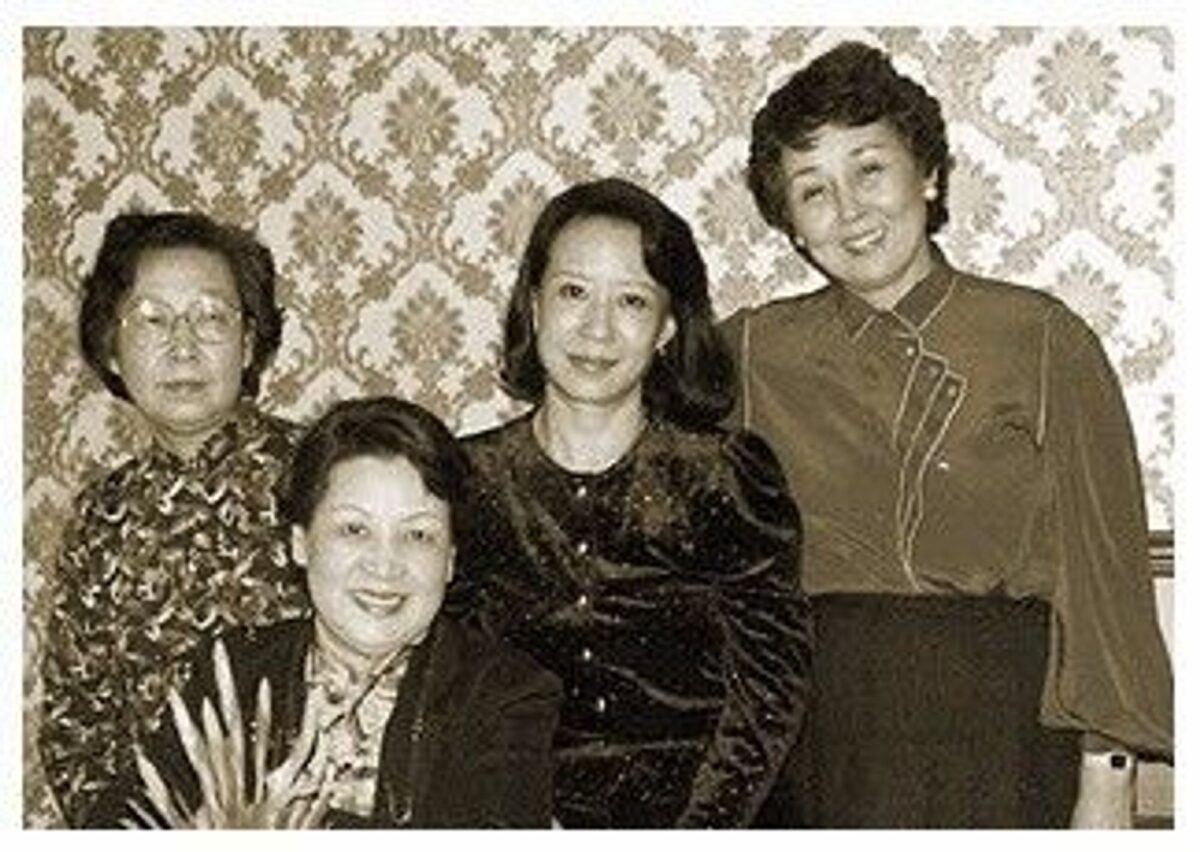
Qi Bangyuan (first from left) and her friend founded the PEN Quarterly, which has contributed greatly to the internationalization of Taiwanese literature--Chapter 10 of Juru River
The charm of literature does not only lie in the emotional catharsis of the great rivers and seas, but also in the rich imaginative energy of discernment, which is always waiting for an opportunity to erupt, making readers in different time and space also stir up their emotions; and literary critics are precisely the most dedicated and perceptive readers, who can touch the mystery between the lines of the works and open up the infinite possibilities of reading and interpreting them.
While the poems of Du Fu and Xin Qiji brought QI Bangyuan deep feelings, Western literature, from Greek and Roman epics to the Romantic and Victorian eras, and even modernists such as Eliot, were also close to her heart. Mr. Qi once mentioned that in the ancient Western literature, she was fond of the Roman epic poem The Aeneid.
The Chronicle of Aeneas describes the journey of Aeneas who, after the Trojan War, took a group of "survivors" across the sea in search of new horizons. After the Trojan War, Aeneas took a group of "relics" across the sea in search of new horizons. But Aeneas himself did not get to see any results from his efforts; he died young, leaving behind an unfinished business. Such an epic poem, as told by Mr. Qi, clearly has a person in it, and we have a greater appreciation of her heart.
In 1995, fifty years after the victory in the war, Qi Bangyuan went to Weihai, Shandong Province, to attend a conference. Standing on the shore of the Bohai Bay, looking north should be the Liaodong Peninsula, and further north would lead to her hometown of Tieling. However, Qi was attending the conference as a Taiwanese scholar and would soon be returning to Taiwan. She can't help but lament, "After fifty years in Taiwan, I'm still a 'foreigner', like The Flying Dutchman, the ship that can never return home." --"The tears of Dufu were transformed into the tears of Qi Bangyuan."
At the same time, she thinks of the ending of E.M. Forster's A Passage to India: "Forget all about trauma, 'not now, not here' (not now, not here)." The interplay between Chinese and Western literature is enough for us to understand that when the development of history comes to a point where there is no way out, it is literature that opens up another realm, thus giving rise to another level of emotion in life.
 English
  简体中文
简体中文  香港中文
香港中文  日本語
日本語  Español
  Português
  Français